
Paspalum lentiferum
Paspalum lentiferum
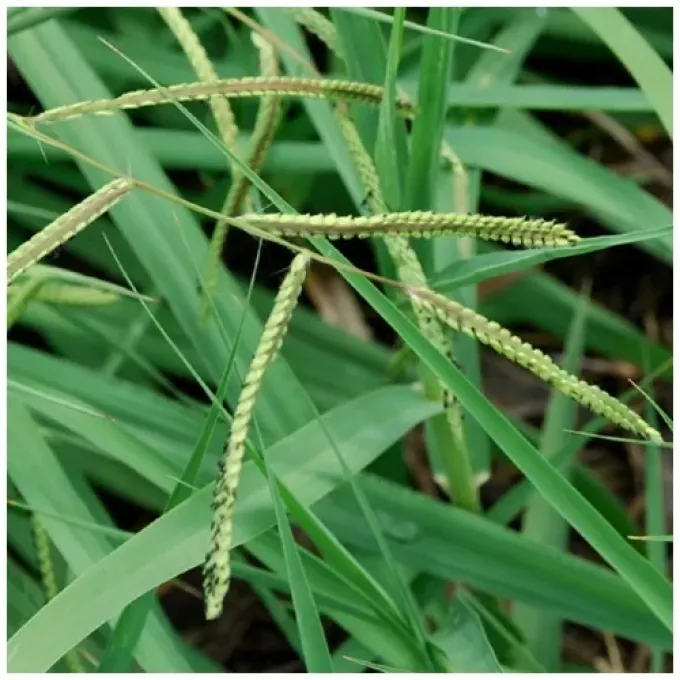
Description
Growing requirements
Paspalum lentiferum is a perennial grass species belonging to the Poaceae family. Recognized for its robustness, this species has significant agricultural potential, particularly in regions where moisture management is a critical factor for successful crop production.
Originating primarily from the Americas, the species is naturally adapted to wetland ecosystems, floodplains, and damp prairies. Its botanical structure allows it to thrive in anaerobic soil conditions that would be detrimental to many traditional forage crops, making it a specialist plant for marginal lands.
Regarding climate, Paspalum lentiferum prefers warm-temperate and tropical conditions. It exhibits high tolerance for heavy rainfall and flooding, while its ability to withstand drought is moderate, relying heavily on the soil's water-holding capacity to maintain vegetative growth throughout the summer season.
The crop performs best on heavy-textured soils, including clays and silt-loams. It is known to tolerate acidic soil conditions, which provides an economic advantage in areas where soil pH correction through liming is cost-prohibitive or physically impractical for large-scale operations.
Agronomic management focuses on establishing a dense turf. Because of its spreading habit, the plant effectively suppresses competing weeds. Field preparation should ensure an even seedbed, although the species also demonstrates excellent resilience if established through vegetative propagation methods in suitable climates.
Harvesting
The primary economic use of Paspalum lentiferum is in livestock grazing systems and hay production. Its forage quality is generally considered good, especially when managed to ensure the biomass is harvested or grazed before the stems reach full maturity and lignification occurs.
For hay production, the optimal timing is during the early flowering stage. This practice ensures a high crude protein content and digestible energy density. Farmers should ensure proper drying conditions, as the dense structure of the grass can retain moisture if not spread adequately during the curing process.
In grazing scenarios, the plant stands up well to trampling, provided that the stocking rate is managed effectively. Rotational grazing is recommended to maintain the vigor of the root system and to allow for rapid recovery of leaf area after the livestock has been moved to a new paddock.
Seed production represents a challenge due to the uneven maturation of the inflorescences. Harvesting requires precision timing or the use of chemical desiccants to synchronize ripening, followed by specialized cleaning processes to ensure high germination rates for subsequent planting seasons.
Fertilization regimes should be based on soil testing, with a focus on nitrogen application during the peak growing season to maximize biomass yield. Sustainable management can yield productive stands for several years, provided the soil moisture and nutritional requirements are consistently met.