
Parrotiopsis jacquemontiana
Parrotiopsis jacquemontiana
Description
Growing requirements
Parrotiopsis jacquemontiana is a distinctive deciduous shrub or small tree belonging to the Hamamelidaceae family. It is a monotypic genus, making it a unique botanical specimen for collectors and specialized landscape designs.
Originating from the Western Himalayas, this plant is naturally found in regions of Afghanistan, Pakistan, and Kashmir. It thrives in high-altitude environments, adapting to cool, moist mountainous slopes and woodland margins.
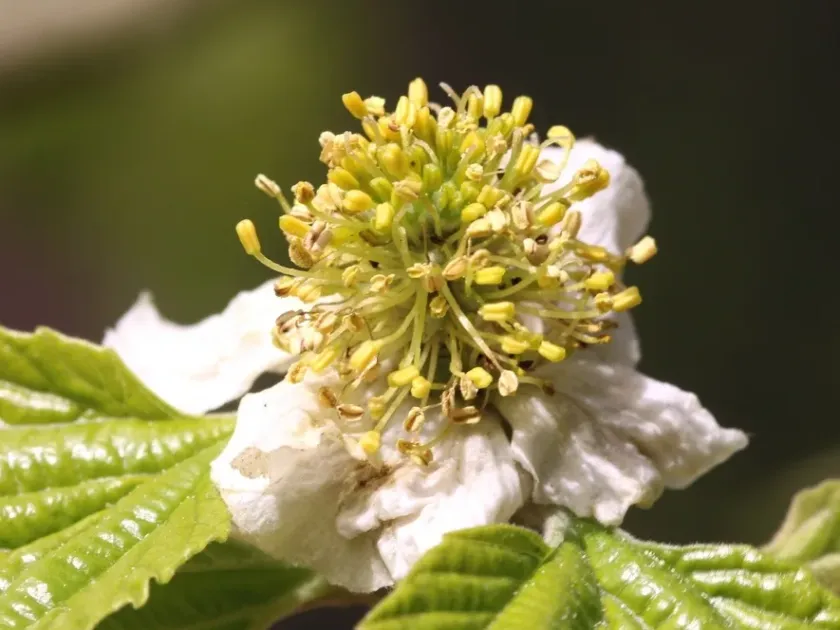
The botanical highlight of this plant is its early spring flowering, where small flower clusters are surrounded by conspicuous white bracts. These bracts persist for some time, giving the plant a showy appearance similar to its cousin, the Persian Ironwood.
Regarding soil and climate, the plant demands well-draining, humus-rich, and slightly acidic conditions. It is not tolerant of waterlogged soils, which can lead to root rot; therefore, planting on a slight slope or in well-amended soil is highly recommended.
It prefers a location with partial shade to full sun, provided the moisture levels are consistent. In cooler climates, it benefits from a sheltered position to protect it from harsh drying winds and early spring frosts that might damage emerging buds.
Main diseases and pests
The plant is generally robust but can be susceptible to common pests like aphids and spider mites. These are particularly active during hot, dry summer periods when the plant's natural vigor may slightly decline without adequate hydration.
Fungal diseases are a primary concern, especially in regions with high humidity. Leaf spot and powdery mildew can occur if the foliage does not dry out sufficiently or if the air circulation around the shrub is restricted.
Root rot is the most dangerous condition for Parrotiopsis, usually resulting from poor soil drainage. Ensuring that the crown of the plant is not buried too deep and the soil allows rapid water movement is crucial for long-term health.
Integrated pest management should focus on early detection and maintaining plant health through proper mulching and pruning. Keeping the base of the shrub clean from debris helps reduce the reservoir of fungal spores.
For chemical intervention, systemic insecticides and copper-based fungicides can be used if infestations or infections are spotted early. However, preventative cultural practices usually suffice for maintaining a healthy specimen.