
African Parkinsonia
Parkinsonia africana
Description
Growing requirements
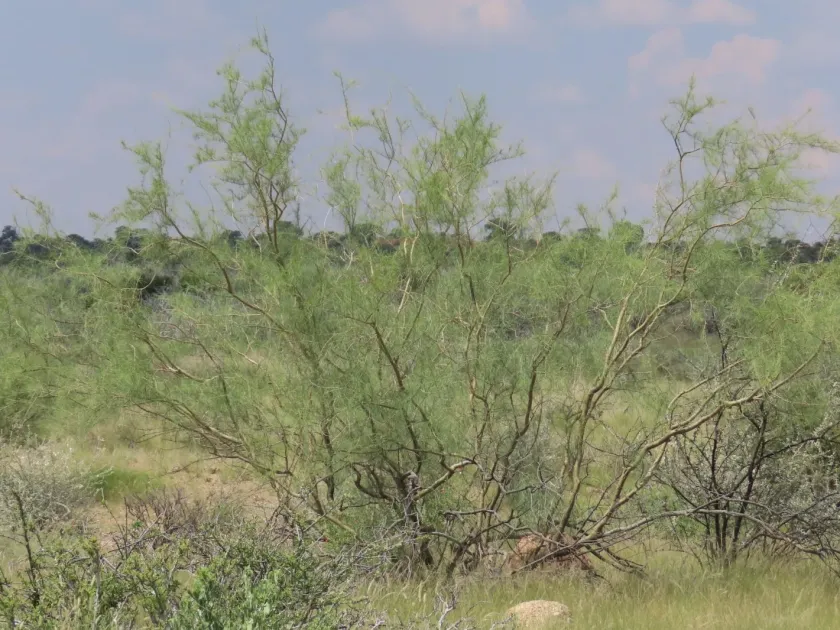
African Parkinsonia (Parkinsonia africana) is a woody shrub or small tree belonging to the Fabaceae family. It is native to the arid regions of Southern Africa, particularly thriving in the harsh, dry environments of Namibia and South Africa, where it has evolved to survive extreme aridity.
This species is a typical xerophyte, characterized by its slow growth and ability to withstand prolonged drought. Its morphological adaptations include reduced leaf surfaces and deep root systems, which allow it to tap into subterranean water sources unavailable to smaller crops.
The plant thrives in full sun and requires well-draining, sandy, or rocky soils. It is highly sensitive to waterlogging, as excess moisture in the root zone can trigger fungal decay, making it essential to ensure proper soil aeration in any agricultural setting.
In terms of agricultural utility, African Parkinsonia is primarily valued for land reclamation and desertification control. By stabilizing loose soil with its roots, it prevents wind erosion and acts as a windbreak for more sensitive vegetable crops grown in arid or semi-arid climates.
Beyond its ecological role, the plant is sometimes used as supplementary fodder for livestock during extreme dry seasons. While it does not provide high-volume forage, its resilience allows it to remain green when other vegetation has completely withered, providing emergency nutrients for browsing animals.
Main diseases and pests
The main threats to Parkinsonia africana include root rot diseases caused by poor drainage and water stagnation. Furthermore, seed-boring insects, particularly bruchid beetles, represent a significant threat to its reproduction as they target the seeds within the pods, potentially reducing natural regeneration.