
Papuacedrus papuana
Papuacedrus papuana
Description
Growing requirements
Papuacedrus papuana is a rare member of the Cupressaceae family. This evergreen conifer is native to the island of New Guinea and the Moluccas, primarily inhabiting high-altitude rainforests where cool and humid conditions prevail.
The species is highly dependent on high atmospheric humidity and excellent soil drainage. It struggles in waterlogged conditions and is sensitive to extreme temperature fluctuations, which makes its cultivation outside of specific mountain environments challenging.
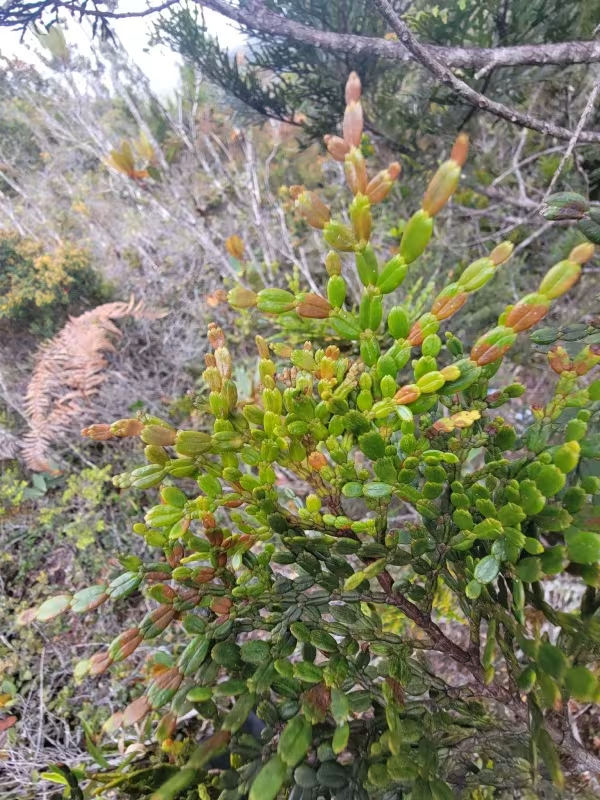
Botanically, the tree exhibits distinct leaf dimorphism: juvenile trees feature needle-like foliage, while mature specimens develop scale-like leaves pressed closely against the shoots. This adaptation is crucial for water conservation in misty mountain cloud forests.
The soil must be slightly acidic, rich in organic matter and humus to support healthy development. In its natural habitat, Papuacedrus papuana acts as a slow-growing canopy species that can form dense stands on rocky slopes and ridges.
Due to its limited natural range and slow growth rate, the species is considered sensitive to environmental changes and habitat degradation, necessitating careful protection and controlled cultivation in specialized nurseries.
Harvesting
Commercial utilization of Papuacedrus papuana is restricted due to its conservation status, though its timber is traditionally prized by local communities for its durability and resistance to rot. These qualities make it suitable for structural timber where longevity is required.
Harvesting in the wild is strictly limited and subject to local regulations to ensure the survival of the species. Its inclusion in commercial forestry is limited by the long maturation cycle, which can span several decades before reaching an appropriate harvestable size.
Beyond construction, the resinous wood is used for crafting decorative items and traditional artifacts. It is relatively easy to work with hand tools and demonstrates excellent dimensional stability once properly seasoned.
Future applications of the species focus on reforestation projects and maintaining high-altitude biodiversity. Restoring this tree in degraded mountainous regions helps prevent soil erosion and supports the local ecosystem integrity.
Scientific research continues to evaluate the sustainable potential of Papuacedrus papuana, seeking a balance between utilizing its valuable wood properties and ensuring the long-term conservation of its wild populations in tropical regions.