
Paphiopedilum insigne
Paphiopedilum insigne (Wall. ex Lindl.) Pfitzer
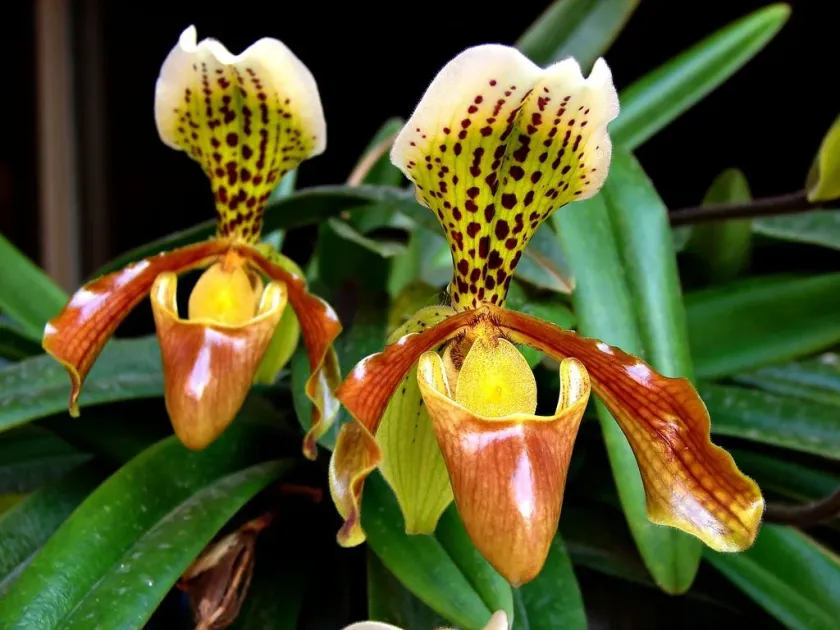
Description
Growing requirements
Paphiopedilum insigne is a distinguished member of the Orchidaceae family. It is a perennial herbaceous plant native to the Himalayan foothills and Northern India, typically growing as a lithophyte on limestone cliffs or in rich organic soil.
The culture requires a moderate temperature range, ideally between 15°C and 22°C. A distinct temperature drop at night is essential for the plant's metabolic processes and to trigger the initiation of floral spikes.
Soil requirements involve a specialized mix. A blend consisting of pine bark, perlite, charcoal, and limestone chips provides the necessary drainage and pH balance, as this species prefers slightly alkaline to neutral growing media.
Humidity levels must remain consistently between 60% and 75%. While the plant enjoys moisture, the substrate must allow for sufficient oxygen exchange to the roots; hence, pots with side perforations are recommended for aeration.
Regarding light, this species thrives in filtered, indirect light. Excessive exposure to direct sun can cause phototoxicity, manifested by leaf chlorosis and sunburn, which reduces the plant's photosynthetic efficiency.
Main diseases and pests
Pathogenic threats include fungal pathogens such as Phytophthora and Pythium, which target the root crown. These are often triggered by water stagnation and poor substrate drainage within the potting medium.
Insect pests, including mealybugs and aphids, are common problems. They tend to colonize the base of the leaves and the developing flower buds, draining the plant's nutrients and leaving behind sticky exudates.
To control populations, integrated pest management (IPM) practices are encouraged. This involves physical removal using cotton swabs soaked in alcohol for minor infestations or the application of horticultural oils for larger outbreaks.
Prevention is centered on environmental control. Maintaining air movement using small fans helps evaporate standing water from leaf axils, which significantly reduces the risk of bacterial soft rot infections.
Monitoring the plant's health via regular inspection of the root zone and leaf surfaces is critical for early detection. Timely repotting in fresh substrate every 18–24 months prevents nutrient depletion and physical degradation of the media.