
Pandorina
Pandorina morum
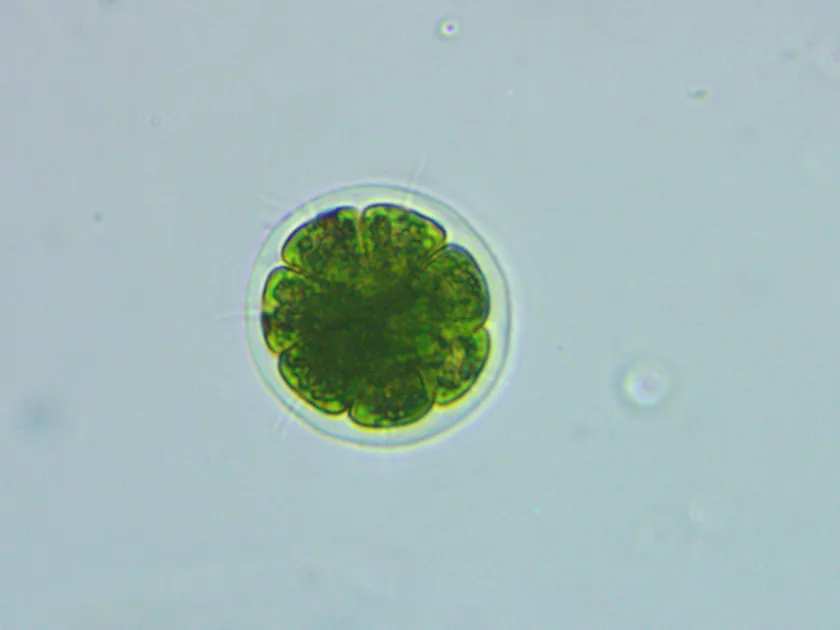
Description
Growing requirements
Pandorina (Pandorina morum) is a genus of colonial green algae belonging to the Volvocaceae family. While not a conventional crop in industrial agriculture, it plays a vital role in aquaculture and pond management as a key component of the primary productivity that supports healthy fish populations.
These organisms are distributed worldwide in a variety of freshwater habitats, including ponds, lakes, and drainage ditches. The species thrives in well-illuminated, nutrient-rich environments where water temperatures are warm enough to support high metabolic rates and rapid vegetative cell division.
Botanically, Pandorina consists of a spherical colony typically made of 16 pear-shaped cells encased in a mucilaginous matrix. Each individual cell is equipped with two flagella, allowing the entire colony to exhibit directed swimming behavior, which helps it occupy optimal positions in the water column.
The reproduction cycle includes both asexual processes, where daughter colonies develop within the parent cell, and sexual oogamous reproduction. Under ideal conditions, Pandorina can proliferate rapidly, becoming a dominant component of the phytoplankton community and contributing significantly to the biomass of the water body.
Agronomic requirements in an aquaculture setting involve managing nutrient levels, specifically phosphorus and nitrogen, to sustain growth. Furthermore, monitoring water quality metrics like pH and dissolved oxygen is essential, as the species is highly sensitive to sudden changes in chemical composition.
Main diseases and pests
The primary threats to Pandorina populations include chemical pollution from agricultural runoff and the excessive application of algicides intended to control macroalgae. These substances can be devastating to colonial green algae, often resulting in complete population collapse.
Various zooplankton species, including rotifers and ciliate protozoa, act as significant predators that consume Pandorina. An unchecked increase in predator populations can severely deplete the algae's biomass, affecting the overall productivity of the aquatic ecosystem.
Pathogenic organisms such as chytrid fungi pose a significant risk, particularly when population density is high. Fungal infections can lead to the systemic decay of colonies, forcing the culture to shift towards resting stages or causing mass mortality under stress.
Environmental fluctuations, such as prolonged low-light conditions and temperature drops, restrict photosynthesis. Without sufficient light, Pandorina slows its growth rate significantly, making it vulnerable to competition from more resilient species of algae or cyanobacteria.
Oxygen depletion is also a major threat, particularly in enclosed or stagnant aquaculture systems. Since Pandorina requires oxygen for respiration during non-photosynthetic hours, maintaining proper aeration is critical to preventing crashes in the culture density.