
Pandan
Pandanus amaryllifolius Roxb.
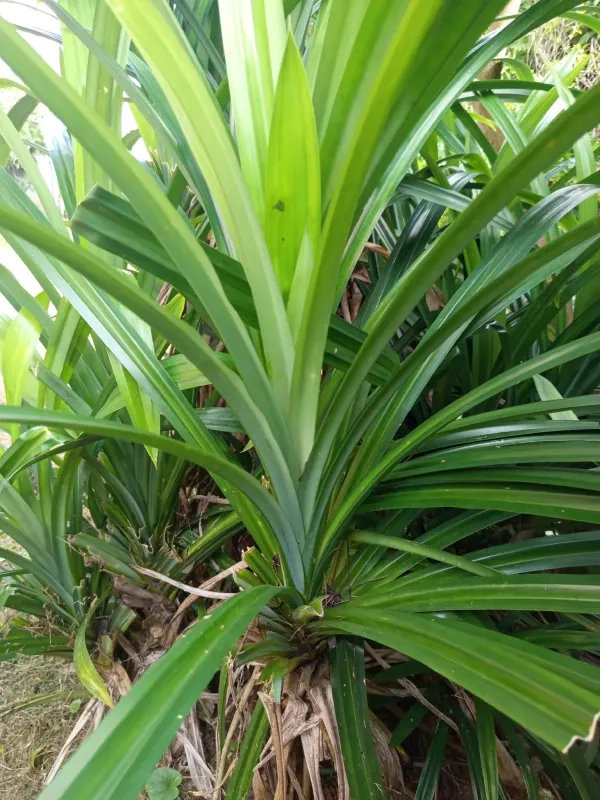
Description
Sowing dates
Pandan is a sterile cultivar that does not produce seeds; therefore, agricultural propagation relies entirely on vegetative methods. Cuttings are the standard way to expand plantations.
Offshoots, which develop at the base of the mature plant, are carefully removed to serve as propagation material. These offsets should have at least some aerial roots developed.
The cuttings are planted in a well-draining, nutrient-rich substrate. A warm, humid environment with protection from direct sunlight is essential for successful root establishment.
Planting density is adjusted based on field layout, ensuring sufficient space for air circulation to prevent moisture-related diseases among the growing foliage.
Using high-quality, disease-free parent stock is critical, as vegetative propagation can easily spread pathogens if the initial plants are compromised.
Growing requirements
As a member of the Pandanaceae family, this plant is native to tropical climates. It thrives in regions where temperatures remain consistently between 20°C and 30°C throughout the year.
High humidity is a non-negotiable requirement for optimal development. Levels below 70% can cause leaf tip necrosis and stunted growth in commercial pandan crops.
The soil should be fertile, sandy loam, or clay loam with high organic content. The key to healthy roots is superior drainage, as the plant cannot tolerate waterlogged conditions.
Pandan requires filtered sunlight or partial shade. Overexposure to harsh, direct sunlight will scorch the leaves and negatively impact the aroma and market value.
Fertilization should be balanced, focusing on nitrogen to encourage lush leaf growth. Applying organic compost or seaweed-based fertilizers often yields superior results for this herb.
Yield
The harvestable portion of the plant is its long, narrow leaves. Productivity is measured by the total weight of fresh, high-quality leaves produced per hectare.
A established pandan plantation can be harvested several times a year. The first harvest usually occurs about 10 to 12 months after the initial planting of cuttings.
Pandan is widely used as a culinary flavoring and natural green coloring agent. The industry values the leaves for their content of 2-acetyl-1-pyrroline, the primary aromatic compound.
Harvesting efficiency relies on the plant's ability to regenerate leaves from the center. Careful pruning techniques ensure that the growing point remains intact for continuous production.
With proper management, a commercial pandan field can remain productive for several years before needing rejuvenation or replanting to maintain leaf size and oil concentration.
Main diseases and pests
Root rot is the most significant threat to pandan, usually caused by over-irrigation or soil that lacks adequate drainage capacity. It can destroy an entire plantation quickly.
Fungal leaf spot diseases may appear during periods of extremely high moisture and poor ventilation. Keeping the canopy dry and well-spaced is the best preventative strategy.
Pests like spider mites and mealybugs often hide on the underside of the leaves. Infestations are most common during dry spells if the ambient humidity drops significantly.
Integrated pest management is preferred to avoid chemical residues on the leaves. Horticultural oils or biological controls are often used to address minor outbreaks.
Regular monitoring of plant health, especially after heavy rainfall, allows for early intervention, preventing the spread of infection throughout the entire crop area.
Harvesting
Manual labor is essential for harvesting pandan, as machines can easily damage the delicate structure of the plant and cause premature oxidation of the leaves.
Leaves are typically harvested in the early morning to ensure the highest concentration of aromatic oils. Freshly harvested leaves should be processed or moved to cool storage immediately.
Transport must be handled with care, using ventilated boxes to prevent heat buildup and sweating, which would otherwise lead to rapid leaf decay and color loss.
Post-harvest sorting is crucial for grading the quality of the product. Uniformity in leaf length, color, and aroma determines the final price in the marketplace.
- Manual trimming at the base.
- Removal of damaged or spotted leaves.
- Grading by size and scent quality.
- Packing in breathable mesh bags.
- Cold chain storage at 10°C.