
Palaquium gutta
Palaquium gutta (Hook.) Baill.
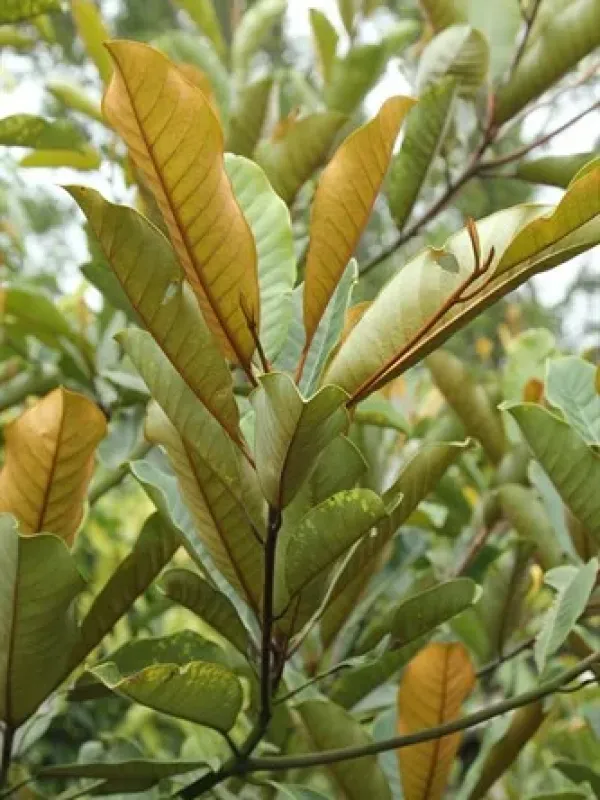
Description
Growing requirements
Palaquium gutta is a significant tropical tree species belonging to the Sapotaceae family. Native to the dense rainforests of Southeast Asia, this tree is valued primarily for its latex, known as gutta-percha.
The climate requirements for this culture are very specific: it thrives in a warm and humid environment with a mean annual temperature ranging between 22°C and 30°C. It does not tolerate frost or extreme drought.
Consistent, heavy rainfall is essential for the tree's development. It prefers areas where precipitation is well-distributed throughout the year, ensuring that the soil remains moist but not waterlogged.
Soil requirements include deep, fertile, and well-drained soils, typically with a high organic content. The species is sensitive to poor soil structure and compaction, which can impede its long-term growth.
Agronomic maintenance involves periodic monitoring of soil moisture and nutrient levels. In plantation settings, canopy management is practiced to ensure optimal light exposure and air circulation for young saplings.
Yield
The primary yield from Palaquium gutta is gutta-percha, a natural thermoplastic polymer extracted from the tree's latex. Unlike rubber, it is not elastic but becomes moldable when heated.
Plantation yields depend heavily on the maturity of the trees and the specific tapping techniques employed. Peak production is generally achieved in trees that are between 20 and 40 years old.
The extracted material is traditionally used in:
- Underwater cable insulation.
- Dental filling and root canal procedures.
- Manufacturing of surgical instruments and specialized gaskets.
Effective management requires balancing the harvest frequency with the tree's health. Over-tapping can lead to significant physiological stress, reducing the overall lifespan of the plantation.
Modern extraction techniques aim to maximize output while maintaining the structural integrity of the tree trunk, ensuring sustainable production levels over several decades of operation.
Main diseases and pests
The main phytosanitary threats to Palaquium gutta include fungal pathogens that attack the roots and vascular system. These are often worsened by inadequate soil drainage or excessively humid conditions.
Boring insects represent a significant risk, as they create tunnels within the wood, which can compromise the tree's stability and disrupt the flow of sap, ultimately leading to decline or death.
Deforestation and habitat loss present external threats to the species' overall resilience. Conservation efforts are necessary to protect the genetic diversity of these trees within their native ranges.
Preventative measures involve regular plantation inspections and the removal of infected branches or trunks. Pruning tools must be sterilized to prevent the spread of diseases between healthy specimens.
Biocontrol agents are increasingly used to manage pest populations, reducing the need for chemical interventions and preserving the quality of the natural latex produced by the trees.
Harvesting
Harvesting gutta-percha involves making precise incisions in the tree's bark. The milky sap flows out and naturally coagulates into a rubbery, solid mass upon exposure to the air.
The collected raw material is then processed to remove impurities such as bark fragments or debris. This cleaning stage is vital for achieving the high-grade material required for sensitive industrial applications.
Tapping cycles must be carefully scheduled to allow the tree to recover. Continuous harvesting without rest periods can exhaust the tree's energy reserves and significantly decrease its productivity.
The quality of the final product is heavily influenced by the cleanliness of the collection process and the speed at which the latex is processed after being harvested from the trunk.
Skilled labor is required to perform the tapping, as imprecise cuts can lead to structural damage and introduce pests or diseases into the tree's vascular system, potentially killing the plant.