
Yellow Paederota
Paederota lutea
Description
Growing requirements
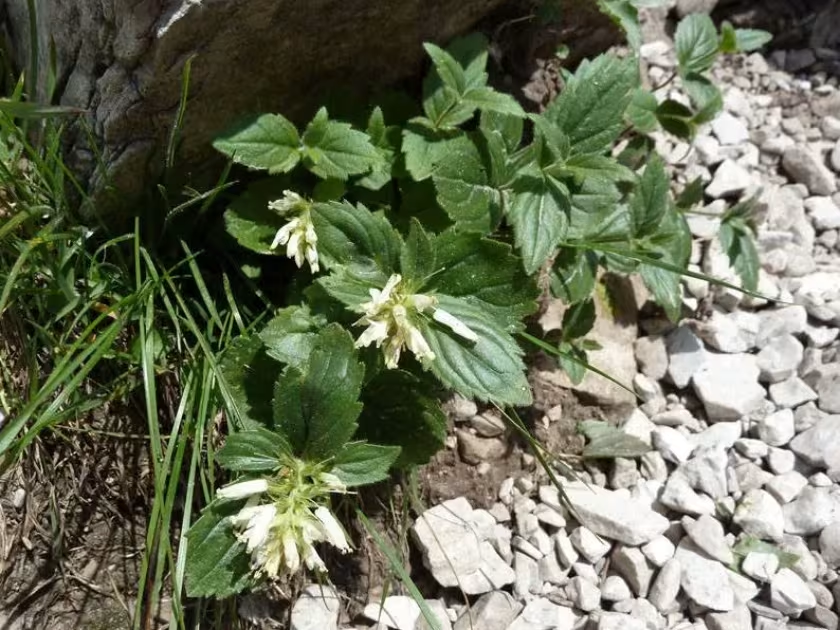
Paederota lutea, commonly known as the yellow paederota, is a perennial herbaceous plant belonging to the Plantaginaceae family. It is a specialized alpine species native to the eastern Alps, where it typically thrives on limestone rock faces and high-altitude slopes.
This plant is strictly adapted to cold and rocky environments, necessitating a free-draining substrate that mimics natural scree conditions. Soil should be alkaline or neutral, rich in mineral content but low in excessive organic fertilizers, to ensure healthy root development.
Climate requirements for the yellow paederota are quite stringent. It requires cool summers and protection from intense heat or extreme drought. In a garden setting, it performs best in positions that receive bright but indirect light, such as north-facing rockeries or shaded alpine beds.
Botanically, it is recognized by its dense, lanceolate leaves and terminal spikes of bright yellow, tubular flowers. Its compact growth habit makes it an elegant structural plant, contributing to the diversity of high-altitude flora collections.
The plant has no commercial agricultural application and is used solely for ornamental purposes within specialist nurseries and botanical gardens. Its cultivation is considered a challenge, intended primarily for experienced gardeners focusing on alpine species.