
Oxalis megalorrhiza
Oxalis megalorrhiza
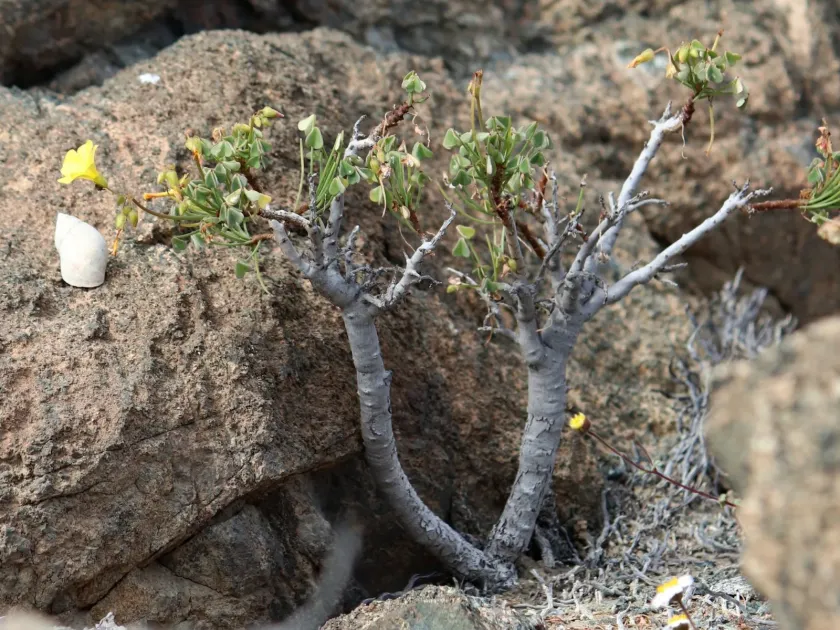
Description
Growing requirements
Oxalis megalorrhiza is a fascinating perennial species belonging to the Oxalidaceae family. Known primarily for its thickened, woody stem base called a caudex, it functions as a succulent, storing water to survive in the arid environments of its native South American habitats.
Originating from the coastal regions of Peru and Chile, this plant has evolved to thrive in rocky, well-draining soils. In cultivation, it is essential to mimic these conditions by using a porous, mineral-based growing medium to prevent root rot and ensure the longevity of the caudex.
The cultural requirements include high levels of bright, indirect sunlight. While the plant can tolerate some direct sun, exposure to intense heat can be stressful. Proper light levels are critical to maintaining the plant's characteristic compact, succulent growth habit.
Temperature management is vital, as this species is not frost-tolerant. It performs best in greenhouse settings or as a houseplant, where temperatures remain consistently mild throughout the year, reflecting the stable conditions of its native coastal climate.
Watering strategy should be strictly controlled, emphasizing a 'soak and dry' approach. During the active growing season, water should be applied only when the substrate has dried out completely, while in the dormant phase, water must be significantly reduced to avoid rot.
Main diseases and pests
The most significant threats to Oxalis megalorrhiza are fungal pathogens, typically resulting from improper substrate moisture. Excessive irrigation often leads to soft rot of the caudex, a condition that is difficult to reverse once the tissue begins to break down.
Insect pests, specifically mealybugs and spider mites, are common nuisances. Mealybugs tend to hide in the crevices of the stem and around the foliage, while spider mites thrive in the dry conditions required for this plant's health, necessitating careful observation.
To prevent pest outbreaks, growers should maintain adequate air circulation around the plant. This practice helps keep foliage dry and creates an environment less conducive to the colonization of common indoor plant pests.
Effective management includes the use of systemic pesticides if necessary, although physical removal of pests followed by improved cultural care is often sufficient for minor infestations on healthy specimens.
Maintaining the structural integrity of the caudex is the best defense against disease. Any signs of discoloration or softening should be treated immediately with sterile tools, ensuring that the plant's health remains the priority during any maintenance work.