
Oraniopsis
Oraniopsis appendiculata
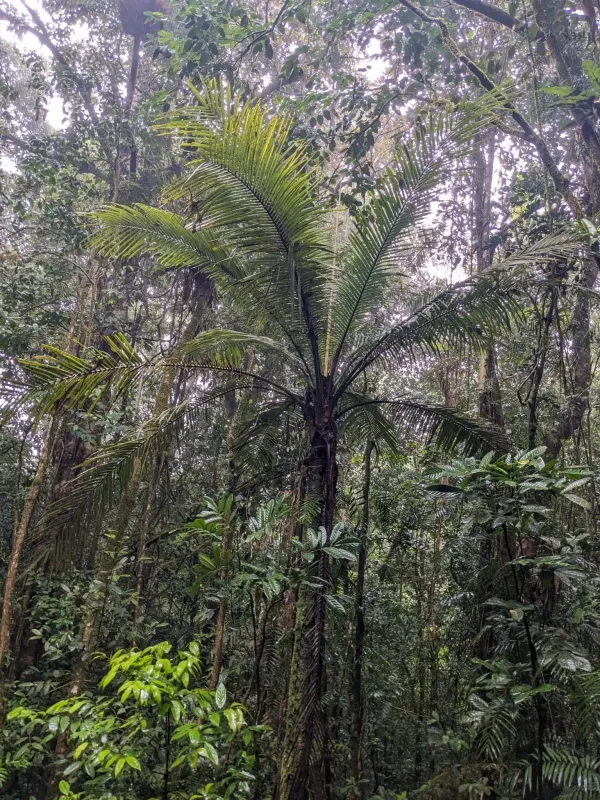
Description
Growing requirements
Oraniopsis is a monotypic genus of palms in the Arecaceae family, uniquely native to the cool and moist rainforests of northeastern Queensland, Australia.
In its natural habitat, the plant thrives in misty, high-altitude regions where the atmospheric humidity remains high throughout the entire year.
Successful cultivation requires a rich, well-draining substrate that mimics the natural forest floor, ensuring both moisture retention and aeration.
Young plants are sensitive to intense direct sunlight, necessitating shading during the early stages of growth to prevent leaf scorch and dehydration.
Providing a consistent, moderate climate is essential, as the species does not tolerate extreme heat spikes or prolonged dry spells in its environment.
Yield
Oraniopsis is not utilized as a commercial agricultural crop, as it does not produce fruits or fibers intended for mass-market consumption.
Its primary value lies in the field of ornamental horticulture, where it is highly prized by specialized collectors and botanical institutions.
Due to its slow growth rate, this palm is considered a premium, long-term investment for greenhouse managers and dedicated gardeners.
The aesthetic appeal of its pinnate leaves and distinctive trunk structure makes it a standout feature in collections that favor rare tropical flora.
Commercial availability is extremely limited, reflecting the specialized requirements and the time-intensive nature of nurturing the plant from seed.
Main diseases and pests
Root rot caused by poor soil drainage and waterlogging is the most significant threat to the survival of the Oraniopsis palm in cultivation.
Spider mites and mealybugs are common pests that tend to infest the foliage, particularly when the palm is kept in environments with low humidity.
Leaf spot diseases can arise if the ambient ventilation is insufficient, leading to stagnant air that promotes the growth of various fungal pathogens.
Nutrient deficiencies, specifically a lack of essential micronutrients, manifest as foliage discoloration and can permanently weaken the palm's health.
Proper sanitation and regular monitoring of environmental conditions are vital to preventing the onset of common tropical palm diseases and infestations.