
Opophytum aquosum
Opophytum aquosum
Description
Growing requirements
Opophytum aquosum is a succulent herbaceous plant belonging to the Aizoaceae family. Native to the arid regions of Southern Africa, it has adapted to survive in harsh environmental conditions with minimal precipitation.
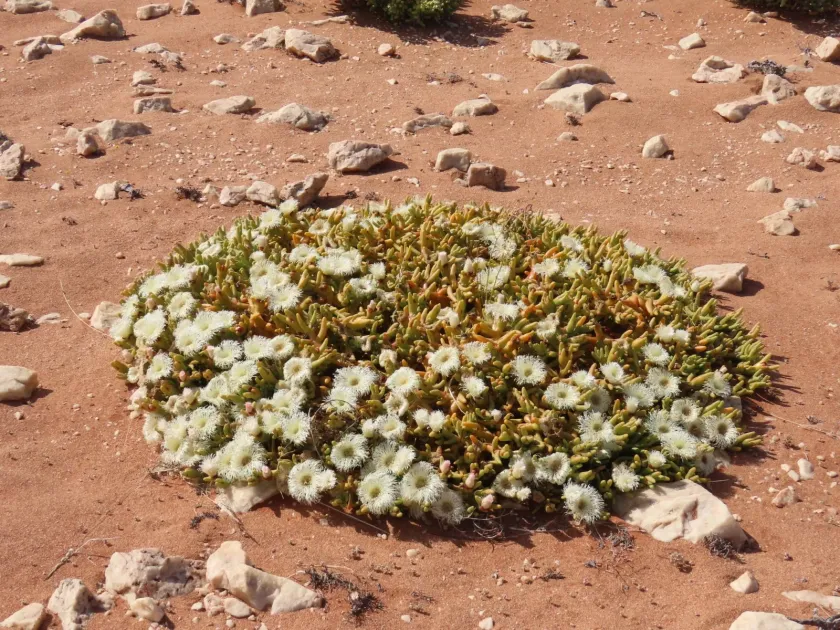
The plant is characterized by fleshy leaves covered in water-storing bladders, known as papillae, which give it a crystalline appearance. As a halophyte, it is highly tolerant of saline soils that are typically unsuitable for most traditional agricultural crops.
The cultivation requirements focus on providing high solar radiation and excellent soil drainage. Sandy or sandy-loam soils are ideal, as they prevent the retention of excessive moisture around the root system, which is fatal to the plant.
Temperature management is vital; the plant requires warm, dry conditions to complete its vegetative cycle. It is not cold-hardy and should be cultivated in climates that remain frost-free throughout the growing season.
Regarding usage, the leaves are harvested for their edible properties. They offer a unique, slightly salty flavor profile, making them a niche ingredient for culinary applications and a promising candidate for saline agriculture projects.
Main diseases and pests
The primary threat to Opophytum aquosum crops is the incidence of fungal pathogens, particularly those causing root rot, which are triggered by waterlogged soil conditions and poor ventilation.
Pests such as mealybugs and spider mites can cause significant damage to the succulent foliage. Their activity is often exacerbated by high temperatures combined with poor air circulation in greenhouse environments.
Effective management involves maintaining dry surface conditions around the plant base and ensuring sufficient space between plants to allow for airflow. Avoidance of overhead irrigation is crucial to prevent mechanical damage to the leaves.
When pests are detected, biological control methods should be prioritized to ensure the safety of the edible parts. Integrated pest management (IPM) protocols are highly recommended for commercial production.
Regular soil health monitoring is essential to prevent the buildup of soil-borne pathogens. Crop rotation is advised, even if the plant is grown in marginal soils, to maintain overall field hygiene and crop productivity.