
Ophrys omegaifera
Ophrys omegaifera
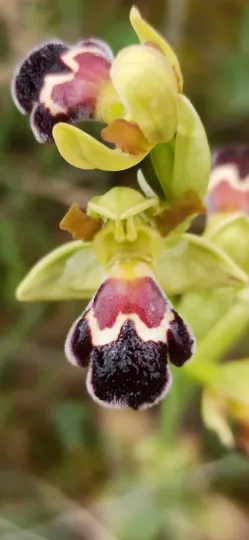
Description
Growing requirements
Ophrys omegaifera is a member of the Orchidaceae family, native to the Mediterranean basin, particularly islands like Crete and parts of the Greek mainland. It is not an agricultural crop and does not possess any industrial or commercial value for cultivation.
The plant is botanically recognized by its distinctive labellum, which displays a pattern reminiscent of the Greek letter omega. This specialized structure has evolved as a pollination strategy, mimicking female insects to attract specific solitary bees.
The species inhabits dry grasslands, rocky slopes, and scrubland areas, which are characterized by high calcium content in the soil. It survives the hot, dry Mediterranean summer by entering a period of dormancy, storing resources in its subterranean tubers.
Environmental requirements for this orchid are extremely strict. It relies on a symbiotic relationship with mycorrhizal fungi in the soil, which are essential for nutrient exchange and the germination of its microscopic, nutrient-poor seeds.
Given these complex ecological dependencies, Ophrys omegaifera is not suitable for traditional horticultural techniques. Conservation of its native habitat is the only viable method to ensure the survival of the species, as it cannot thrive in artificial growing conditions.
Main diseases and pests
Habitat loss due to intensive agricultural expansion and urban development is the primary threat to the stability of wild populations.
Overgrazing by sheep and goats in rural areas directly removes plant biomass, often destroying specimens before they can reproduce.
Pathogenic fungi can pose a risk to the tuberous root system, especially during years with anomalous rainfall patterns or waterlogging.
Various insects and larvae may feed on the floral structures, which significantly reduces the success rate of pollination and seed set.
The illegal collection of wild orchids for private trade or gardens further depletes the remaining populations, making it a critical conservation concern.