
Oncosiphon suffruticosus
Oncosiphon suffruticosus
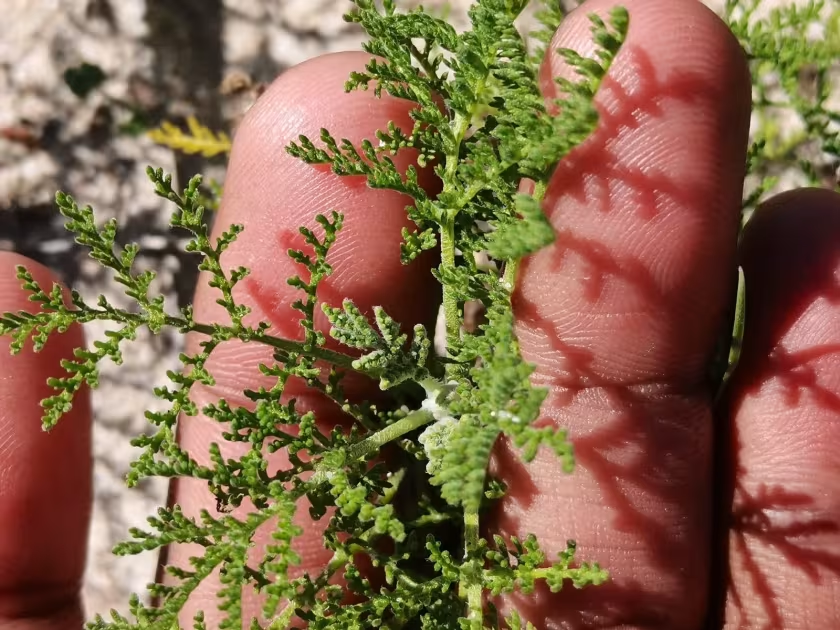
Description
Sowing dates
The sowing of Oncosiphon suffruticosus is ideally performed in early spring, once soil temperatures consistently exceed 10 degrees Celsius to ensure rapid germination.
Preparing a fine seedbed is essential, as the small seeds require optimal soil-to-seed contact to successfully overcome the initial growth stage.
Seeds should be covered with a very thin layer of soil, no deeper than 0.5 to 1 cm, to prevent exhaustion of the seed's energy reserves before emergence.
Field sowing is typically done in rows spaced 50 to 60 cm apart, allowing for efficient mechanical weeding and nutrient management between the rows.
Regular monitoring of soil moisture during the first three weeks is critical to prevent the surface from crusting, which could inhibit the emergence of delicate sprouts.
Growing requirements
As a member of the Asteraceae family, Oncosiphon suffruticosus thrives in well-drained, sandy or loamy soils that provide excellent aeration for its root system.
The plant demonstrates high tolerance to drought and is naturally adapted to regions with intense sunlight, making it highly suitable for arid climate agriculture.
Neutral soil pH levels are optimal, as extreme acidity or alkalinity can negatively affect nutrient uptake and the synthesis of secondary metabolites in the foliage.
While the plant is hardy, it requires consistent sun exposure throughout the growing season to maximize its chemical profile and biomass production.
Maintaining a clean field free of competing weeds is vital, particularly in the first stages of development, to ensure the plants have sufficient space and nutrients.
Yield
The yield potential of Oncosiphon suffruticosus is directly linked to soil fertility and the adoption of proper crop management practices during the peak growth phase.
Harvesting for biomass generally produces between 1.5 and 2.5 tonnes of dried material per hectare when cultivated under favorable climatic and management conditions.
The economic value of the yield is determined by the concentration of essential oils and other active compounds that accumulate during the flowering period.
Regulated pruning and strategic fertilization can extend the productive lifespan of the plantation, allowing for multiple harvests over several years.
Standardizing the harvest time to the period of full bloom ensures the highest chemical quality and uniformity of the processed plant material.
Main diseases and pests
Fungal diseases, especially those causing root and stem rot, represent the primary threat to plantations when soil moisture levels are not properly managed.
Insect pests, such as aphids and various plant-sucking bugs, can cause significant damage to the soft tissues and flowers during the peak of the dry season.
Weed infestation is a major challenge; uncontrolled competition can significantly stunt the growth of young seedlings and reduce overall field productivity.
Ensuring proper crop rotation practices helps in breaking the life cycle of soil-borne pathogens that might otherwise thrive in continuous cropping systems.
- Regular field scouting for early detection of pest clusters.
- Application of organic preventative treatments for fungal pathogens.
- Implementation of good drainage systems to avoid waterlogging.
Harvesting
Harvesting should be timed precisely with the plant's full flowering stage, which is when the concentration of bioactive substances reaches its maximum level.
Mechanical harvesting via mowing is the most efficient method, keeping the cut height around 10–15 cm to allow for subsequent regrowth of the plants.
Harvested biomass must be transported quickly to drying facilities to prevent heat buildup and the loss of essential volatile oils through fermentation.
Drying is conducted in well-ventilated shade areas to maintain the integrity of the chemical components and ensure the desired sensory properties of the crop.
Once sufficiently dried, the plant material is processed, milled, or packaged, ensuring it is stored in a cool, dry place to maintain shelf-life stability.