
Ofaiston monandrum
Ofaiston monandrum
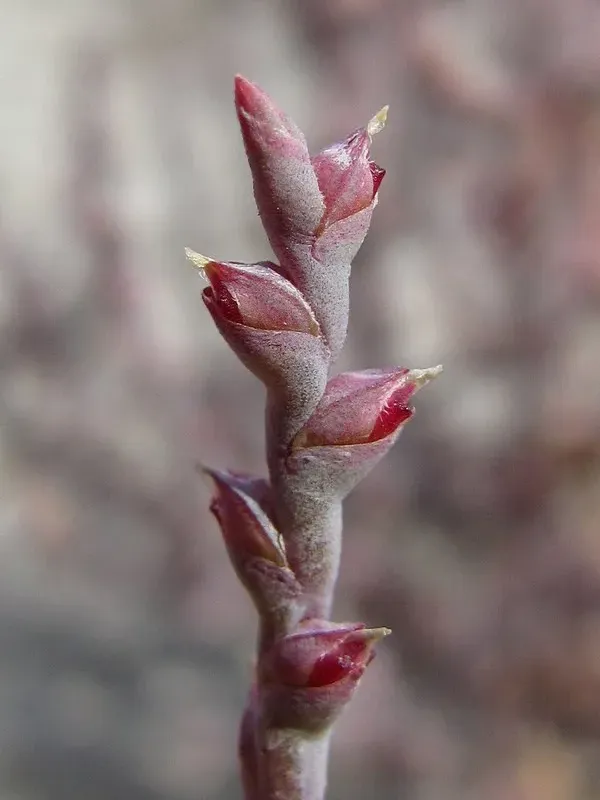
Description
Growing requirements
Ofaiston monandrum is a specialized annual plant belonging to the Amaranthaceae family. It is recognized as a halophyte, perfectly adapted to thrive in highly saline soils that are inhospitable to most conventional crops.
Originating from the arid zones of Central and Middle Asia, this plant has evolved to dominate harsh desert environments, including solonchaks, takyrs, and sandy desert flats.
The botanical structure of Ofaiston monandrum includes a robust root system capable of extracting moisture from deep, compact soil layers, which is essential for survival in regions with negligible rainfall.
Regarding climatic requirements, the plant excels under high-temperature regimes and prolonged periods of drought. Its physiological mechanisms allow it to regulate water usage even under intense desert heat.
Soil management for this species focuses on maintaining the ecological balance of saline environments. It acts as a primary colonizer in areas where soil alkalinity prevents the establishment of common vegetation.
Yield
The primary agricultural utility of Ofaiston monandrum is its role in supporting livestock in desert rangelands. It serves as a vital forage source, particularly for camels, sheep, and goats.
During autumn and winter, when biomass production from other species declines, this plant provides essential nutrients, filling a critical gap in the forage calendar of arid regions.
Yield estimation is strictly tied to the amount of spring precipitation. The plant exhibits rapid biomass accumulation during the short wet season, providing a significant harvest potential.
Beyond direct grazing, the plant is utilized for phytoremediation and soil stabilization. By protecting soil surfaces, it helps to mitigate wind erosion, which is a major threat to semi-arid lands.
While formal large-scale cultivation is limited, scientific interest remains high due to the plant's nutritional profile, which is rich in minerals beneficial for desert-adapted livestock breeds.