
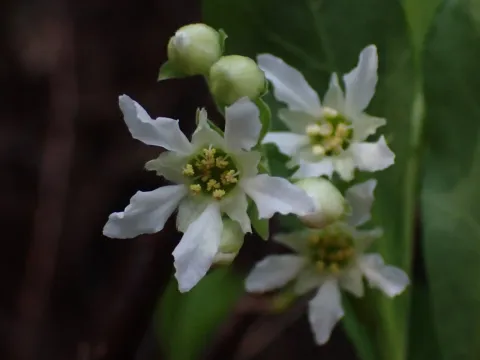
Oemleria
Oemleria
Oemleria cerasiformis, commonly known as osoberry or Indian plum, is the sole species in the genus Oemleria, belonging to the Rosaceae family. Native to western North America, this shrub is highly valued for its early spring blossoms and distinct edible, albeit bitter, fruits.
What the section contains

Oemleria
The plant thrives in moist, well-drained, fertile soils rich in organic matter. It exhibits a natural preference for woodland margins and riverbanks, suggesting that sites with partial shade are ideal for mimicking its native habitat and ensuring long-term vigor.
Water requirements for Oemleria are significant, especially during the establishment phase and prolonged dry spells. Consistent soil moisture is necessary to prevent premature leaf drop, although the plant must be protected from waterlogged conditions that induce root rot.
Climate adaptability is best in temperate zones with cool, wet winters and mild summers. While the species is reasonably hardy, it does not perform well in extreme heat or arid environments, which can lead to rapid desiccation of the delicate foliage.
Standard horticultural practices involve applying a layer of organic mulch around the base to retain moisture and suppress weeds. Pruning should be kept to a minimum, focusing mainly on removing dead wood or shaping the shrub to maintain its natural, graceful habit.
The primary diseases affecting Oemleria include powdery mildew, which can become prevalent during humid conditions with poor air circulation. Effective management involves ensuring adequate spacing between shrubs and pruning to open the canopy for airflow.
Leaf spot diseases can also occur in wetter environments. Gardeners are advised to clear leaf litter around the base of the plant in autumn to remove potential overwintering sites for fungal spores.
Aphids are the most frequent insect pests, often congregating on the tender, succulent growth in early spring. Regular monitoring and, if necessary, the application of insecticidal soaps can control their population before it causes damage.
Spider mites represent a threat during hot, dry summer periods. These pests feed on the underside of leaves, causing a stippled appearance. Maintaining proper irrigation levels serves as a key preventative strategy against mite infestations.
In some instances, scale insects may infest the stems. If detected, these should be removed manually or treated with horticultural oils during the dormant season to prevent secondary infestations and further stress to the plant.