
Indian plum
Oemleria cerasiformis (Torr. et A. Gray ex Hook. et Arn.) J.W. Landon
Description
Growing requirements
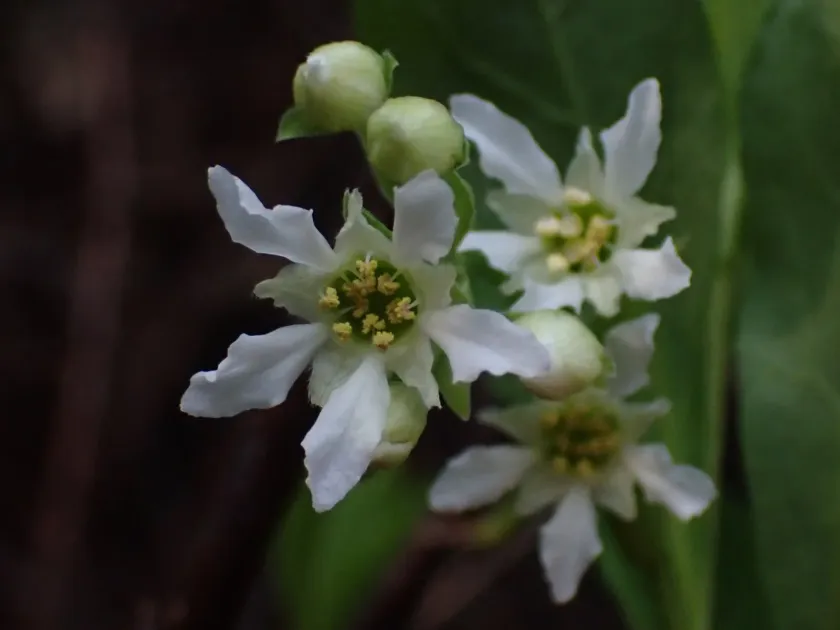
Oemleria cerasiformis, commonly known as the Indian plum or osoberry, is a unique deciduous shrub belonging to the Rosaceae family. It is the sole species within its genus and is highly valued for being one of the first shrubs to bloom in the spring.
The native range of this shrub extends along the Pacific coast of North America, from southern British Columbia through Washington and Oregon to California. It typically inhabits moist forests, stream banks, and thickets, thriving in conditions with filtered light.
To cultivate Indian plum successfully, one must provide well-drained, nutrient-rich soil with a neutral to slightly acidic pH. The plant requires consistent moisture but will not tolerate waterlogged soil, which can lead to root rot; therefore, good drainage is essential.
Climate-wise, Oemleria prefers cool, temperate conditions and does not thrive in areas with intense, sustained summer heat. It is relatively hardy, but in colder climates, it benefits from protection against drying winter winds that can damage young shoots.
Maintenance is relatively low, focusing on applying organic mulch to retain soil moisture and regulate temperature. Annual pruning is generally limited to removing dead wood or shaping the shrub to encourage more dense foliage growth.
Main diseases and pests
Oemleria cerasiformis is generally a robust plant, but it can be susceptible to mild powdery mildew if air circulation is poor. Planting specimens with sufficient spacing helps prevent the accumulation of moisture on the leaves, reducing the risk of fungal growth.
Aphids are the most common pests, typically colonizing the tender new growth during early spring. While rarely lethal, heavy infestations can weaken the plant, so monitoring and biological controls are recommended if necessary.
Leaf-eating caterpillars may occasionally appear, but they are usually managed by the plant's natural predators or by simple mechanical removal. The plant has excellent regenerative capacity if damage is not extensive.
Root damage from rodents can be a concern in areas with high populations of field mice or voles. Installing physical barriers around the root zone during planting can provide effective protection for young, vulnerable plants.
The key to long-term health is ensuring the shrub is not stressed by drought or excessive soil compaction. Providing adequate space and proper site selection will significantly reduce the likelihood of pest and disease outbreaks.
Harvesting
The primary use of Oemleria cerasiformis in human landscapes is aesthetic, as its early, fragrant white flowers are a welcome sight. It serves as an excellent plant for edible landscaping, providing habitat and food for native wildlife.
The fruits of the Indian plum are small, dark, stone-like berries that are edible but possess a distinctively bitter, tart flavor. Because of their astringency, they are usually consumed after processing into jams, jellies, or sauces mixed with sugar.
Harvesting should be done only when the fruit is fully ripe and deep purple or black in color. It is important to avoid under-ripe berries, as they contain high levels of tannins that make them unpalatable and difficult to process.
Caution should be exercised regarding the seeds of the fruits. Like many members of the Rosaceae family, the seeds contain cyanogenic glycosides and should not be consumed in large quantities; always remove them during the preparation of jams or preserves.
Beyond human consumption, the plant is widely used in permaculture and restoration projects due to its fast growth rate and ability to stabilize soil along slopes, making it a functional and attractive addition to naturalistic gardens.