
Night-flowering jasmine
Nyctanthes arbor-tristis
Description
Sowing dates
Nyctanthes arbor-tristis, commonly known as the Night-flowering jasmine, belongs to the Oleaceae family. It is typically propagated via seeds or semi-hardwood cuttings under controlled nursery conditions.
For seed propagation, fresh seeds should be sown immediately after collection, as they lose viability rapidly. Soaking seeds in water for 24 hours can significantly improve the germination rate.
Cuttings are preferred for clonal propagation to ensure uniformity in plant traits. Cuttings should be treated with rooting hormones and kept in high-humidity environments to promote root development.
The ideal planting season corresponds with the onset of the monsoon in tropical regions. This timing ensures sufficient moisture levels for establishing a robust root system before the dry season begins.
Seedlings should be hardened off before being transplanted to the field, ensuring they are strong enough to withstand direct environmental stressors and temperature fluctuations.
Growing requirements
The plant thrives in well-drained, fertile soil ranging from loamy to sandy loam types. Proper drainage is essential, as the species is highly susceptible to root rot in waterlogged conditions.
It prefers a sunny location for optimal flowering, though it can tolerate partial shade in extremely hot climates. Increased exposure to sunlight usually correlates with a higher yield of fragrant blossoms.
Temperatures between 20°C and 35°C are ideal for the development of the plant. It is sensitive to frost, which limits its outdoor commercial cultivation to tropical and subtropical zones.
Consistent watering is required during the active growing season, particularly when buds are forming. However, irrigation frequency should be reduced during the dormant period.
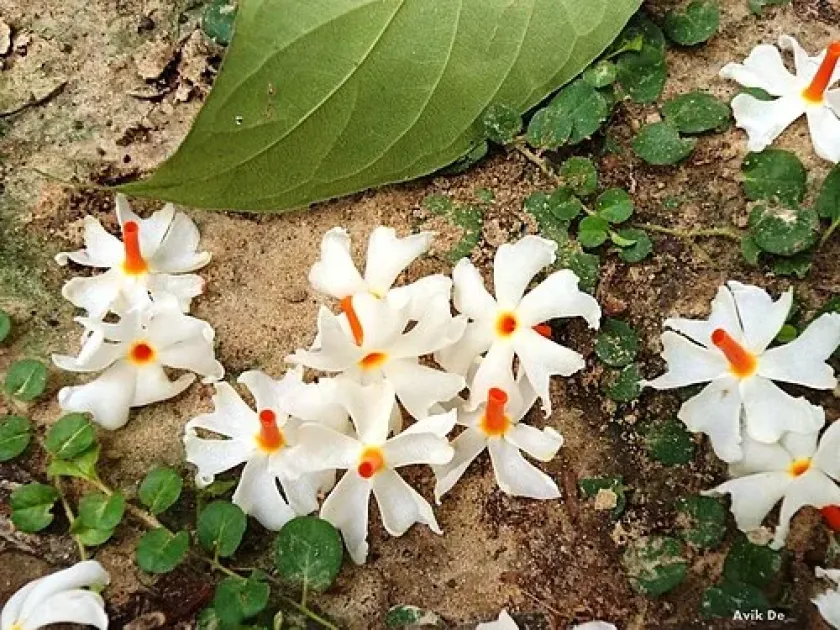
Regular application of balanced fertilizers supports both vegetative growth and the production of the unique orange-tubed white flowers that the plant is commercially valued for.
Yield
The primary yield consists of the flowers, which are highly valued for their aromatic properties and the extraction of essential oils. These are used extensively in the perfume and cosmetic industry.
Leaves are a secondary yield, collected for pharmaceutical use due to their documented anti-inflammatory and antipyretic medicinal properties. Yield potential per hectare is influenced by plant density and pruning practices.
The orange corolla tubes of the flowers are also used as a natural dye for fabrics, particularly in traditional textile production, adding economic value beyond the aromatic extract.
Commercial yields are optimized through regular pruning, which encourages the growth of new shoots where the flowers emerge. Well-managed plantations can sustain high productivity for many years.
Efficient post-harvest processing is crucial to ensure that the delicate chemical compounds in the flowers are preserved, thereby maintaining the market value of the product.
Main diseases and pests
Spider mites are common pests in dry conditions, often infesting the underside of leaves. Integrated pest management using neem oil or biological controls is recommended to maintain plant health.
Powdery mildew can affect the leaves during periods of high humidity and poor air circulation. Proper spacing between plants and canopy thinning are effective cultural practices to prevent this.
Root rot is the most serious threat, usually resulting from poor soil drainage. Ensuring that the site is properly graded and avoiding over-irrigation are key preventative measures.
Leaf-eating insects can cause significant damage to the canopy if left unmanaged. Regular monitoring and the application of botanical pesticides are preferred in sustainable farming systems.
Nutritional deficiencies, such as iron or nitrogen deficiency, can manifest as leaf chlorosis. Soil testing and the application of micronutrient-rich fertilizers are necessary to keep the plants productive.
Harvesting
Harvesting is a time-sensitive operation, as the flowers bloom at night and drop off early in the morning. Collection must be completed before the sun hits the fallen flowers to preserve quality.
Laborers typically spread cloth sheets underneath the shrubs at night to collect the blossoms as they naturally fall. This method prevents damage to the delicate flowers and ensures a clean harvest.
Immediately after collection, the flowers should be transported to a drying facility. Shade-drying at moderate temperatures is used to extract the essential oils without degrading their quality.
Leaf harvesting is done periodically throughout the growing season by selecting healthy, mature foliage. Leaves are dried using ventilated equipment to prevent molding during the processing phase.
Logistics and speed are the cornerstones of a successful harvest. By minimizing the time between picking and processing, producers ensure the highest possible concentration of aromatic and medicinal compounds.