
Western Australian Christmas Tree
Nuytsia floribunda
Description
Growing requirements
Nuytsia floribunda, commonly known as the Western Australian Christmas Tree, is the sole species in its genus and a prominent member of the Loranthaceae family. Unlike most mistletoes, it is a free-standing tree that is capable of photosynthesis while maintaining a hemiparasitic root system.
The plant thrives in sandy, well-draining soils that are typically nutrient-poor. It is native to the southwest corner of Western Australia, where it has adapted to withstand periodic droughts and high temperatures through its specialized root architecture.
Botanically, it utilizes underground haustoria to tap into the roots of surrounding vegetation. This allows the tree to extract water and essential nutrients from other plants, significantly enhancing its survival rate in the harsh, dry Australian environment.
Standing up to 10 meters tall, the tree is characterized by its woody structure and expansive root system. This aggressive root growth is a survival strategy, though it makes the tree unsuitable for close-proximity planting with delicate garden species or infrastructure.
Cultivation is considered difficult for general agriculture due to its reliance on host roots and strict soil requirements. It is rarely grown outside of botanical conservation programs or specialized native xeriscaping projects where natural conditions can be replicated.
Harvesting
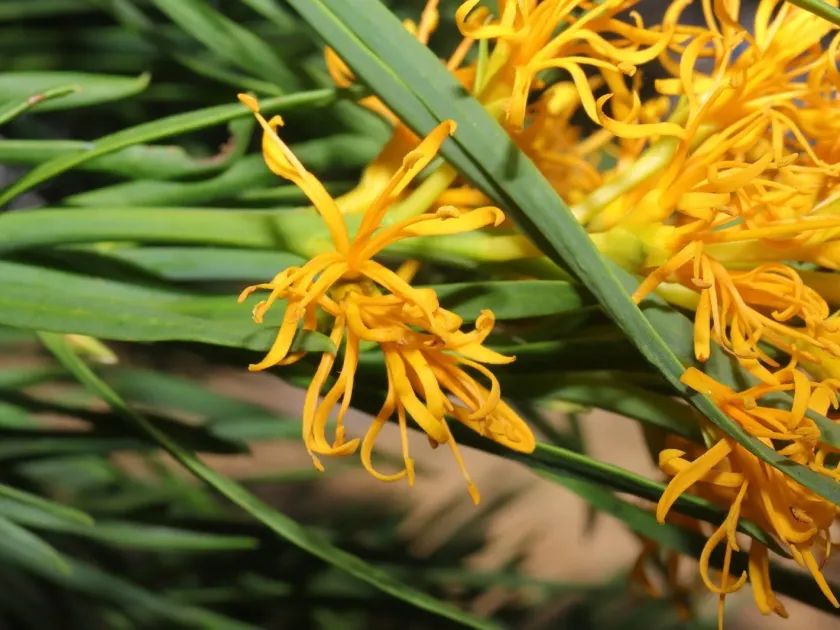
The tree earns its name from its spectacular flowering display, which occurs during the Australian summer around December. The vibrant orange blossoms cover the entire canopy, creating a striking visual impact that makes it a symbol of the festive season in its native range.
Following pollination, the plant produces winged seeds. Propagation is challenging in nurseries because seedlings require a compatible host plant's root system to attach to shortly after germination; without this interaction, the young plant typically fails to thrive.