
Nucularia perrinii
Nucularia perrinii
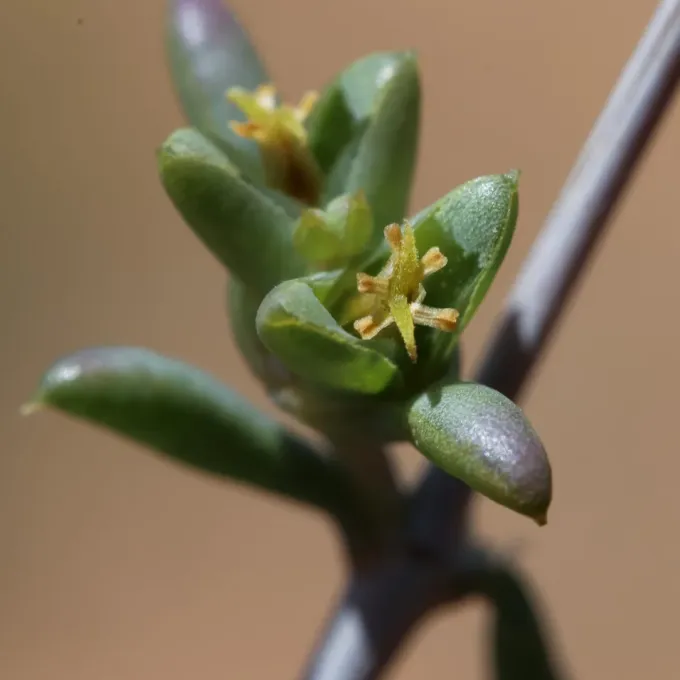
Description
Growing requirements
Nucularia perrinii is a perennial shrub belonging to the Amaranthaceae family. It is native to the Saharan desert regions, where it has evolved to thrive in high-temperature, low-precipitation environments.
Botanically, it is classified as a succulent-like halophyte. Its fleshy foliage allows it to store water efficiently, while its deep root system stabilizes sand dunes, preventing soil erosion in arid landscapes.
The crop thrives in sandy, saline soils that would be hostile to most standard agricultural plants. It is highly tolerant of drought and demonstrates exceptional resilience against the harsh climate of North Africa.
Cultivation practices focus primarily on soil stabilization and range management. Because it is a perennial species, it provides a consistent, albeit slow-growing, source of biomass for desert ecosystems.
In terms of agricultural use, it serves as a critical fodder resource for camels and goats during periods when other vegetation is unavailable, playing a vital role in local pastoral economies.
Main diseases and pests
The primary threat to the stability of Nucularia perrinii populations is overgrazing, which prevents the establishment of new seedlings and reduces the density of mature shrubs in vulnerable desert zones.
The plant is naturally resistant to most pests and diseases common to agricultural crops due to its high salinity, which effectively inhibits the growth of pathogens within its tissues.
Environmental degradation, including the compaction of soil by motorized vehicles and excessive human activity, threatens the delicate balance of the areas where this plant is commonly found.
Competition with invasive species, although rare in the extreme heart of the desert, can still occur in more humidified micro-habitats, potentially limiting the spread of this native shrub.
Effective management strategies require controlled grazing rotation to ensure the natural regeneration of the species and the preservation of its essential role in land conservation.