
Notoceras bicorne
Notoceras bicorne
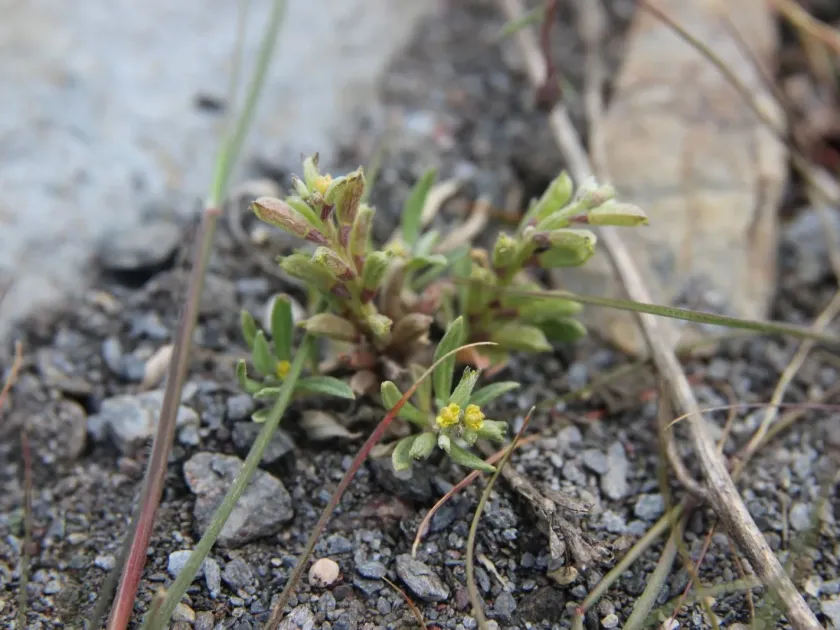
Description
Sowing dates
Notoceras bicorne is a desert-adapted annual plant belonging to the Brassicaceae family. It is evolutionary programmed to germinate and develop rapidly in response to seasonal precipitation patterns in its native habitat.
Sowing should ideally take place in early spring or after the first significant rain, depending on regional climatic specifics. The seeds require a well-prepared seedbed that mimics the friable, sandy structures of arid environments.
The seeding rate must be balanced to ensure optimal plant density, preventing overcrowding that could lead to poor air circulation and nutrient competition. Shallow seeding is essential for successful germination due to the small size of the seeds.
Temperature control during the germination phase is crucial. A cooler environment during the first few days post-sowing often results in more robust seedling establishment and stronger root development.
Management of the crop requires attention to the photoperiod. As a plant adapted to high-light environments, it performs best in open fields where sunlight is unobstructed and the duration of daylight is sufficient for rapid biomass accumulation.
Growing requirements
This crop thrives in sandy, stony, and well-drained soils. Its primary requirement is excellent aeration; heavy or compacted soils must be avoided as they inhibit root respiration and increase susceptibility to fungal infections.
Notoceras bicorne is exceptionally drought-tolerant but requires moderate moisture during the seedling stage. Once the root system is well-established, the plant becomes highly resistant to water scarcity, making it suitable for low-input farming systems.
Neutral to slightly alkaline soil conditions are ideal for this species. It exhibits a remarkable tolerance for salinity, which positions it as a potential candidate for agricultural research in salt-affected areas.
Temperature range should ideally remain between 15°C and 25°C during the active growing phase. While it can survive significant fluctuations, extreme heat during the flowering stage may result in reduced seed set.
Nutrient requirements are generally low, as the plant is adapted to nutrient-poor soils. However, minimal applications of phosphorus can significantly improve root vigor and overall resilience to environmental stressors.
Main diseases and pests
The primary biotic threats include various cruciferous pests, such as flea beetles, which can cause significant damage to young, succulent leaves. Monitoring populations early in the season is vital for crop protection.
Root rot and damping-off are the most common pathological issues, typically triggered by waterlogging or excessive humidity. Maintaining proper soil moisture levels through intelligent irrigation management is the best preventive strategy.
Weed control is essential during the early stages of plant development. Because Notoceras bicorne has a relatively modest growth rate in the beginning, it can be easily outcompeted by weeds, necessitating regular inter-row cultivation.
Nematode infestations may occur in specific sandy soil conditions. To mitigate this risk, farmers are advised to avoid continuous cropping and implement crop rotation strategies with non-host species.
Environmental stress, particularly prolonged lack of light or extreme cold, can weaken the plants, making them more susceptible to secondary infections by opportunistic pathogens found in the soil.