
Nothotsuga longibracteata
Nothotsuga longibracteata
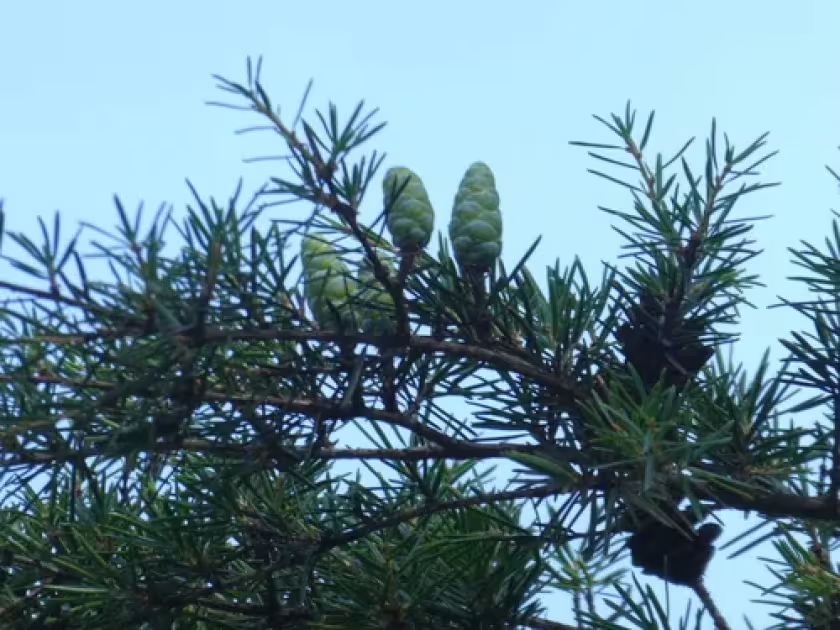
Description
Growing requirements
Nothotsuga longibracteata is a rare, evergreen coniferous tree belonging to the Pinaceae family. As the only species in the genus Nothotsuga, it represents a significant evolutionary link between the genera Tsuga and Picea, characterized by its long bracts on the cones.
The species is endemic to the mountainous regions of southern and southeastern China. It thrives in high-altitude forests ranging from 300 to 2300 meters, preferring a humid, subtropical climate where rainfall is distributed throughout the year.
To cultivate this species successfully, one must provide deep, fertile, and well-drained soils with a slightly acidic profile. Waterlogging is detrimental to the root system, which necessitates the selection of sloping terrain or the implementation of an artificial drainage system during planting.
Regarding climate, the tree prefers locations with stable high humidity and protection from harsh, drying winds. While it can adapt to partial shade, young specimens generally require diffuse sunlight to develop a robust crown structure without suffering from foliage burn.
The economic value of the species is primarily centered on its role in forest conservation and specialized arboretums. Because it is a rare and protected species in its native range, its commercial utilization is restricted, encouraging instead propagation for ecological restoration.
Main diseases and pests
The primary health risks for Nothotsuga longibracteata include fungal diseases such as needle cast and root rot, which are triggered by poor air circulation and excessive soil moisture during warmer seasons.
Insect pests, including spider mites and various types of scale insects, may infest the trees in dry conditions. Maintaining tree vigor through appropriate fertilization and regular monitoring is essential to prevent severe infestations that could jeopardize the growth of the stand.