
Notholithocarpus densiflorus
Notholithocarpus densiflorus
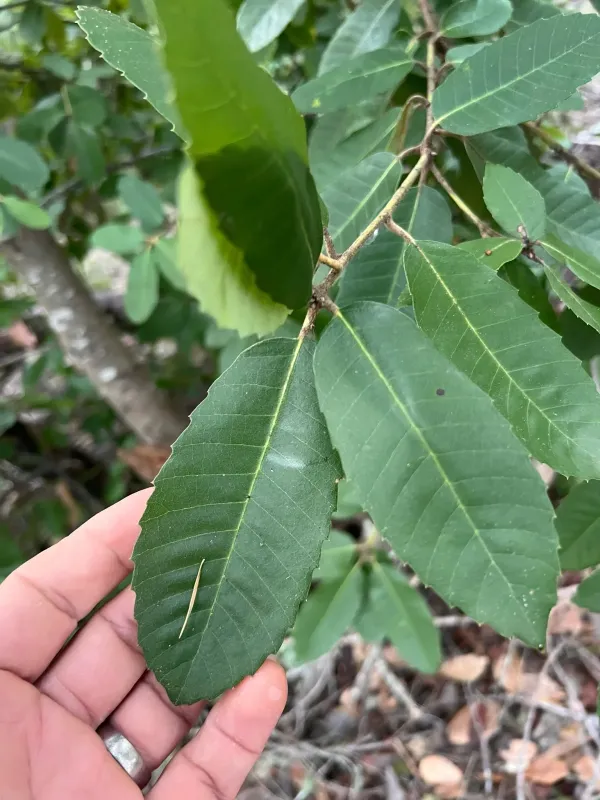
Description
Growing requirements
Notholithocarpus densiflorus, commonly known as the tanoak, is a significant evergreen member of the Fagaceae family, native to the Pacific coast of North America.
The tree thrives in cool, moist climates with moderate temperatures, showing a distinct preference for areas that receive consistent winter rains and mild summers.
It requires deep, well-drained, acidic to neutral soils, though it demonstrates remarkable adaptability to rocky or nutrient-poor substrates in various mountainous terrains.
Tanoak is highly shade-tolerant, which allows it to successfully establish itself beneath the forest canopy and compete effectively with other species for sunlight and resources.
Successful management of this crop involves maintaining a healthy forest floor layer, which provides the necessary mycorrhizal associations for vigorous root development during the early life stages.
Yield
The primary economic use of Notholithocarpus densiflorus is timber production, valued for its high density, durability, and excellent finish, making it suitable for high-end furniture.
The fruit (acorn) is historically significant for its high tannin content, which has applications in the tanning industry and provides a source of biomass for various forest-based products.
In landscape architecture, the tanoak is prized as an ornamental tree, favored for its year-round evergreen foliage and ability to provide structural aesthetic value to public spaces.
Forest management strategies, including selective thinning and site maintenance, are crucial for maximizing the growth rate and structural timber quality of the trees throughout their maturation cycle.
The species also plays a vital role in regional biodiversity as a prolific producer of mast, serving as a primary food source for various wildlife populations, which maintains local ecosystem balance.
Main diseases and pests
The most devastating threat to tanoak populations is Phytophthora ramorum, the causal agent of Sudden Oak Death, which causes lethal bark cankers and foliar lesions.
This disease spreads rapidly through sporulation, particularly in moist coastal fog conditions, and can cause widespread mortality across entire stands of Notholithocarpus densiflorus.
Secondary pests, such as wood-boring beetles, frequently colonize diseased or stressed trees, accelerating the decline and compromising the structural integrity of the harvested timber.
In nursery settings, root rot pathogens can be a persistent issue, exacerbated by poor drainage and excessive irrigation, leading to stunted growth or complete loss of nursery stock.
Management efforts prioritize the identification of resistant tree genotypes, strict biosecurity protocols for plant movement, and the implementation of regular health surveys in commercial forests.