
Nolletia ciliaris
Nolletia ciliaris
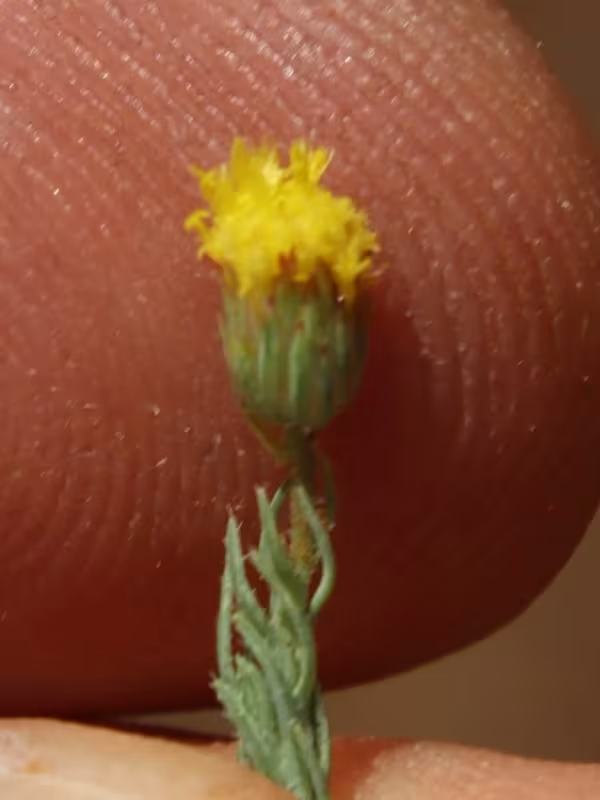
Description
Sowing dates
The sowing of Nolletia ciliaris is strategically aligned with the onset of the rainy season in its native African habitats.
Farmers typically aim for planting just before the first rains to ensure the seeds utilize natural precipitation for rapid germination.
Seeds are placed at a shallow depth of 1-2 centimeters to maintain proper contact with the soil while allowing sufficient oxygen for the embryo.
Soil temperatures should ideally range from +20 to +25 degrees Celsius to facilitate vigorous growth of the root system.
Uniform seed distribution is essential to prevent overcrowding and ensure that each plant has enough space to establish its deep taproot.
Growing requirements
Nolletia ciliaris belongs to the Asteraceae family and is highly valued for its adaptation to arid and semi-arid environments.
The plant thrives in well-drained, sandy to loamy soils that prevent the stagnation of moisture, which is lethal to its root structure.
It displays remarkable drought resistance, allowing it to remain productive in conditions where many other crops would fail.
Sunlight exposure is a critical requirement, as the plant needs full sun to maintain its metabolic rate and structural integrity.
Its natural resilience to sharp diurnal temperature fluctuations makes it a robust candidate for cultivation in challenging climates.
Main diseases and pests
In its native range, the plant is relatively hardy, but cultivation can introduce susceptibility to common agricultural pathogens.
Root rot remains the most significant threat, particularly in poorly drained soils or during unseasonably wet growing periods.
Insect pests, including cutworms and various leaf-feeding insects, can reduce biomass significantly if left uncontrolled.
Fungal infections of the foliage can occur due to poor air circulation within the canopy, especially in high-density planting schemes.
Integrated pest management strategies focusing on early detection and weed control are essential for healthy crop stands.