
Niemeyera prunifera
Niemeyera prunifera
Description
Sowing dates
Niemeyera prunifera is a slow-growing evergreen tree that requires specific conditions for propagation from seeds. The seeds are recalcitrant and lose viability quickly; therefore, they should be sown immediately after extraction from the fruit into a moist, well-draining substrate.
Optimal germination occurs at temperatures between 24 and 28 degrees Celsius. High atmospheric humidity is critical for successful seedling development, so sowing containers are often covered to maintain a stable microclimate until true leaves appear.
The potting medium should be light, organic-rich, and slightly acidic. Water stagnation during the germination phase is detrimental, making proper drainage in seed trays a mandatory requirement for successful plant establishment.
Initial growth is notoriously slow, which is typical for many species in the Sapotaceae family. During the first years, young plants need protection from direct sunlight and must be monitored to ensure they do not experience drought stress.
Transplanting to a permanent location should only occur once the root system has fully colonized the nursery pot. The best time for planting out is at the onset of the rainy season to facilitate natural adaptation and root establishment.
Growing requirements
This species is a tropical plant that thrives in consistently warm environments without sharp temperature fluctuations. It grows best in a temperature range of 20 to 32 degrees Celsius and is highly susceptible to frost damage.
Niemeyera prunifera prefers deep, fertile soils that retain moisture but offer excellent drainage. In its natural range within the rainforests of Eastern Australia, it is adapted to high humidity levels and consistent rainfall patterns throughout the year.
Young trees prefer partial shade, which protects them from excessive heat. As they mature, they can tolerate more direct sunlight, provided they are sheltered from strong, drying winds that can cause leaf scorch.
Regular application of organic mulch around the base of the tree helps regulate soil temperature and retain moisture. It is also beneficial for suppressing weeds that compete with the young tree for nutrients and surface water.
In cultivation, maintaining high air humidity is essential. If growing in environments with dry air, frequent misting of the foliage is recommended to mimic the tropical forest conditions required for healthy growth and leaf maintenance.
Yield
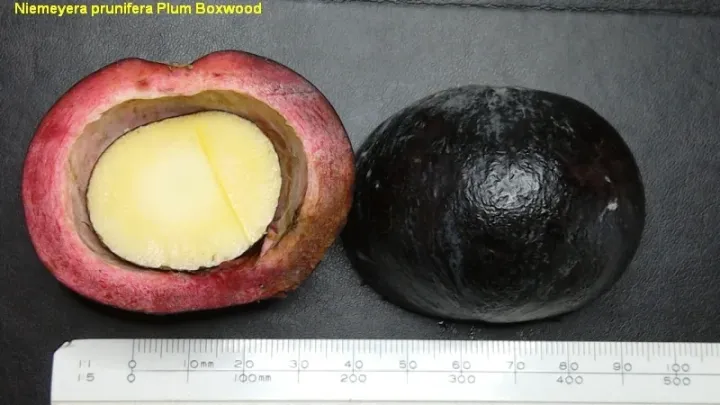
The tree is primarily cultivated for its edible fruit, which resembles a large plum. Fruit production usually takes significant time to reach maturity, with trees often requiring 7 to 10 years before bearing their first consistent crop.
Yields are heavily influenced by the effectiveness of local pollinators during the flowering season. The fruit ripens gradually, necessitating multiple harvests over an extended period to collect the crop at its peak maturity.
Uses for the fruit include fresh consumption and processing into jams, jellies, or desserts. The pulp is appreciated for its unique taste and texture, which is characteristic of various members of the Sapotaceae family found in tropical regions.
The wood of this tree is remarkably dense and durable, making it potentially valuable for specialized woodworking, although its primary horticultural role remains focused on its fruit-bearing capacity.
To improve yields in orchard settings, careful management of nutrient levels, particularly potassium, is recommended. Proper thinning of fruit set can also help the tree allocate energy for better fruit size and quality at harvest time.
Main diseases and pests
The most significant threat to this species is fungal root rot, which typically stems from overwatering or poorly drained soil. Consistent waterlogging in the root zone quickly leads to canopy decline and the eventual death of the plant.
Common insect pests include scale insects and mealybugs, which feed on the sap of tender shoots and leaves. These pests can weaken the tree and foster the growth of sooty mold on the honeydew secretions left behind.
In enclosed or greenhouse conditions, red spider mites may emerge as a threat, especially if humidity levels are allowed to drop too low. Regular monitoring and biological control methods are the preferred ways to manage these infestations.
Young stems are vulnerable to damage from rodents, which may strip the bark at the base of the trunk. Protective mesh or trunk guards are highly recommended during the establishment phase to ensure the tree remains healthy.
Nematodes can also cause issues in sandy, nutrient-poor soils by inhibiting root system expansion. Incorporating high-quality compost into the planting site improves soil structure and helps the tree resist damage from soil-borne pathogens.