
Nicotiana clevelandii
Nicotiana clevelandii
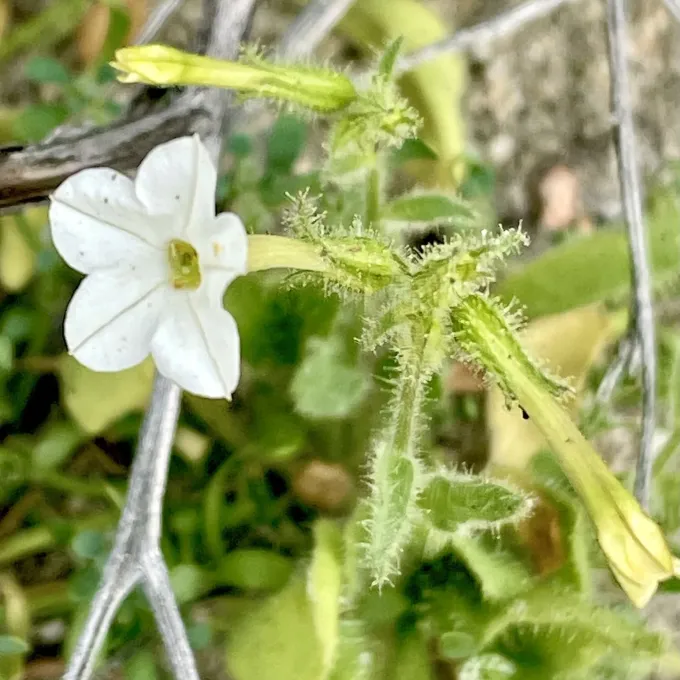
Description
Sowing dates
Nicotiana clevelandii is an annual herb within the Solanaceae family, native to the arid desert regions of the southwestern United States and Mexico.
Sowing should take place in controlled greenhouse environments during late winter to ensure a long vegetative period under stable lighting conditions.
Seeds are small and require surface sowing or very shallow coverage, as light is often a trigger for germination in many Nicotiana species.
Maintaining a constant substrate temperature between 20 and 25 degrees Celsius is crucial for achieving high and uniform germination rates.
Standard horticultural practices involve using well-draining, sterile potting media to prevent damp-off diseases that can affect young seedlings.
Growing requirements
The plant is naturally adapted to high-light environments and thrives in conditions that mimic its desert-like native habitat.
Optimal growth is achieved with moderate watering cycles, as this species is sensitive to waterlogged conditions that can cause root decay.
Ideal daytime temperatures for the vegetative development phase range from 22 to 28 degrees Celsius, with cooler nights supporting healthy metabolism.
Nutrient requirements are modest; balanced nitrogen-phosphorus-potassium fertilizers help support robust flowering and seed production cycles.
Good ventilation is essential, especially in greenhouses, to maintain low humidity levels and prevent the development of powdery mildew and other pathogens.
Yield
Nicotiana clevelandii is not typically grown for commercial biomass or nicotine production, but serves as a vital model organism in plant science.
It is extensively used in virology research, specifically as a systemic host for studying virus replication and protein expression dynamics.
The yield of this crop is measured by the plant's ability to support high titers of viral inoculum, which is essential for pharmaceutical and lab applications.
Seed production is consistent, allowing researchers to maintain large, genetically uniform populations for ongoing longitudinal experimental projects.
Productivity in laboratory settings is enhanced through precise photoperiod control, which influences the metabolic rate and overall physiological state of the plants.
Main diseases and pests
Aphids and whiteflies represent the most significant threats to plant health, as they are primary vectors for various damaging plant viruses.
Root rots caused by overwatering are common obstacles in cultivation, necessitating careful monitoring of soil moisture levels throughout the growing season.
Powdery mildew can impact leaf quality in stagnant, humid environments, reducing the plant's effectiveness as a host for experimental virus studies.
Strict biosecurity measures are required in labs and greenhouses to prevent the unintended spread of specialized plant pathogens between experimental batches.
- Integrated pest management strategies.
- Routine cleaning of greenhouse benches.
- Quarantine protocols for new plant materials.
Harvesting
Harvesting of plant tissue for experimental use is timed to coincide with peak viral accumulation or specific developmental growth stages.
Seed harvesting is conducted when the capsules turn brown and dry; they should be collected before natural dehiscence occurs to prevent yield loss.
Collected materials are often flash-frozen or processed immediately to maintain the integrity of proteins or viral particles within the leaf tissue.
Seeds intended for long-term storage must be dried thoroughly and kept in cool, airtight containers to ensure viability for subsequent planting seasons.
Post-harvest processing involves careful screening to remove debris and ensure that only mature, high-quality seeds are stored for future research.