
Nicotiana benthamiana
Nicotiana benthamiana
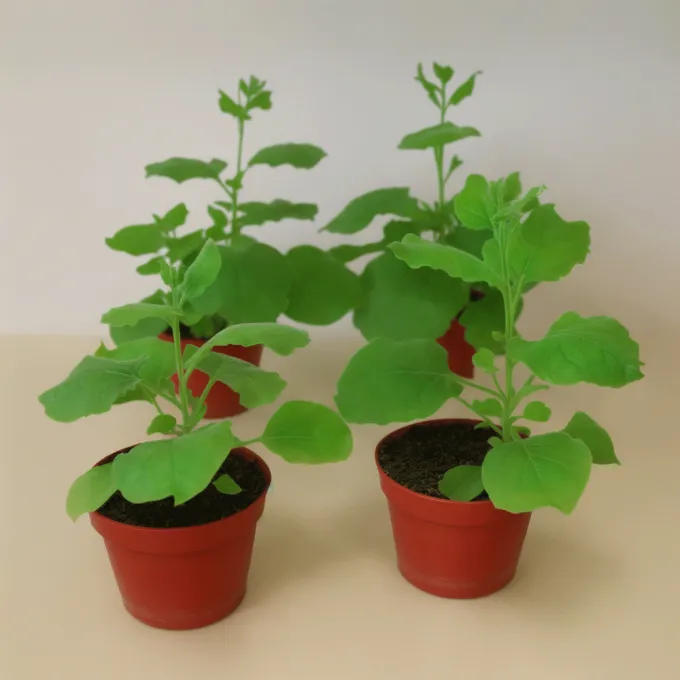
Description
Sowing dates
The sowing of Nicotiana benthamiana requires a shallow approach because the seeds are extremely small and need light exposure to trigger germination processes.
Optimal germination is achieved in controlled environments with temperatures maintained between 22 and 25 degrees Celsius and high humidity levels provided by clear covering.
Seedlings typically emerge within 7 to 14 days; once the first true leaves are fully developed, they should be transplanted into individual pots to avoid competition.
Using a lightweight, peat-based substrate with added perlite ensures proper aeration and root development, which is vital for the health of the young plants.
Production cycles can be scheduled year-round in greenhouse facilities, making this species an essential tool for rapid molecular farming and research applications.
Growing requirements
While native to the arid regions of Australia, Nicotiana benthamiana requires consistent and moderate irrigation to thrive in a cultivated or laboratory setting.
The plant demonstrates a strong response to photoperiod; a long-day regime of at least 14–16 hours of light is recommended to promote vegetative growth and prevent early bolting.
A well-balanced soil mix with a slightly acidic pH (5.8 to 6.5) is ideal, combined with regular, light applications of fertilizer to support high biomass production.
Temperatures should be held steady between 20 and 28 degrees Celsius, as extreme fluctuations can cause physiological stress and impact the quality of the plant tissues.
Proper air circulation is crucial to prevent high humidity pockets, which often lead to fungal pathogen outbreaks in densely populated greenhouse environments.
Main diseases and pests
Greenhouse whitefly is the most persistent pest for this species, causing direct damage to leaves and serving as a vector for various viral infections that degrade biomass quality.
Aphid populations can rapidly expand on young tissue, causing stunted growth and leaf distortion, requiring constant vigilance and integrated pest management strategies.
Powdery mildew represents a significant fungal threat, thriving in environments with poor ventilation and high humidity, leading to widespread leaf necrosis.
Root rot pathogens, such as Pythium, are common issues caused by waterlogged conditions or poor substrate drainage, often resulting in sudden plant wilting.
- Greenhouse whitefly
- Aphids
- Powdery mildew
- Root rot
Harvesting
Harvesting Nicotiana benthamiana is typically performed during the late vegetative stage, just prior to the plant's initiation of the flowering process for maximum protein yield.
Leaf material is carefully excised using sterilized tools to minimize tissue damage, as rapid processing is required for downstream extraction of recombinant proteins.
For research purposes, collected samples are often flash-frozen in liquid nitrogen to preserve molecular integrity, ensuring accuracy for subsequent analytical testing.
Seed harvesting involves collecting the mature brown capsules once they have dried naturally on the plant, followed by careful cleaning and cool storage for viability.
Operational procedures during harvest must prioritize cleanliness to maintain the strict standards required for molecular farming and pharmaceutical production.