
Neurada procumbens
Neurada procumbens
Description
Growing requirements
Neurada procumbens is the sole member of its genus within the Neuradaceae family, adapted exclusively to desert and semi-desert habitats. As an annual plant, it completes its life cycle rapidly, capitalizing on short-lived moisture in harsh environments.
The native range of this species extends across the arid belts of North Africa, the Arabian Peninsula, and parts of Western Asia. It is uniquely structured to thrive in shifting sands and gravelly desert plains where high temperatures dominate.
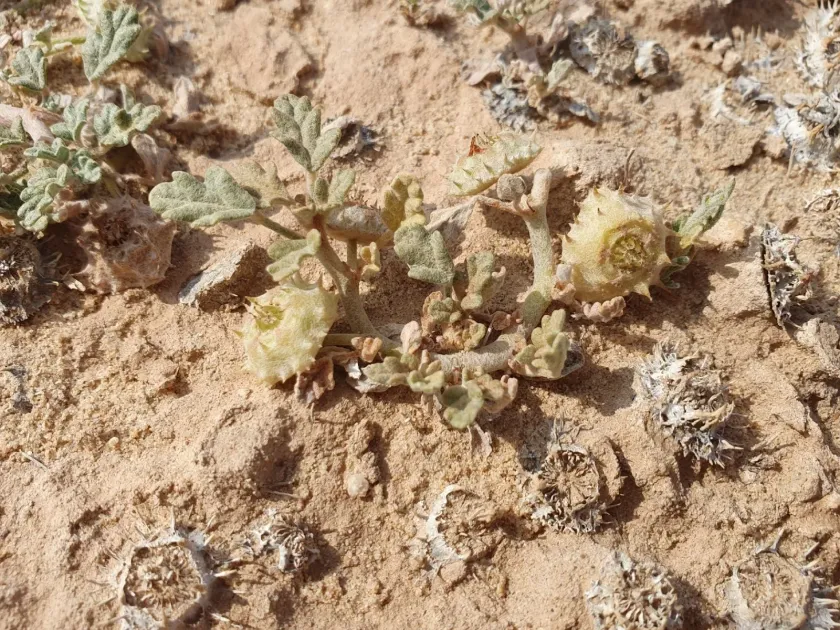
The plant is anatomically characterized by its prostrate stems that spread radially across the sand surface. A key identifying feature is its fruit, which matures into a woody, spiny disc that aids in seed dispersal by attaching to nomadic desert fauna.
In terms of habitat requirements, the plant thrives in low-nutrient, sandy substrates. It is highly drought-tolerant, possessing the ability to rapidly produce seeds immediately following infrequent rainfalls, ensuring species survival for the next season.
From an ecological management perspective, Neurada procumbens is valued for its ability to stabilize loose soil surfaces. Its roots help consolidate sand, acting as a natural deterrent against wind erosion in fragile desert ecosystems.