
Nestronia umbellulata
Nestronia umbellulata
Description
Growing requirements
Nestronia umbellulata is a member of the Santalaceae family, characterized by its unique hemiparasitic nature. The plant relies on connecting its roots to those of host woody plants to obtain water and mineral nutrients for its survival and growth.
The native range of this species is confined to the southeastern United States. It thrives in well-established deciduous forests where environmental conditions provide consistent moisture, moderate shade, and a thick layer of organic litter on the forest floor.
Cultivation requirements involve maintaining acidic soil conditions and high levels of organic matter. Because the plant cannot survive independently without a host, successful propagation is only possible when planted alongside compatible woody host species.
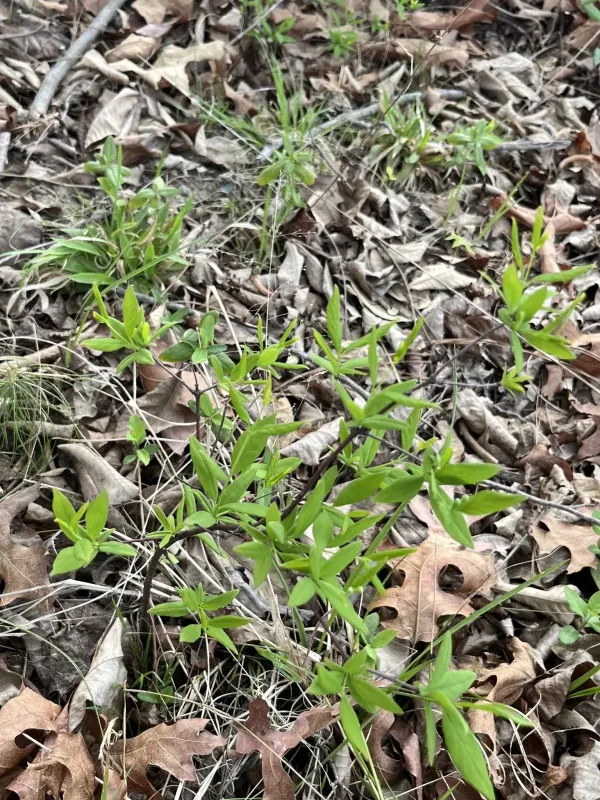
Botanically, it appears as a shrub with opposite leaves and produces small, inconspicuous flowers in clusters. The biological strategy of the plant is to integrate into the root zone of other forest vegetation, making traditional agronomic practices inapplicable.
In terms of usage, the plant has no industrial agricultural application. It is strictly preserved in its natural habitat and is occasionally studied by botanists to understand the complex interactions between hemiparasitic species and forest health.
Main diseases and pests
The primary threats to Nestronia umbellulata involve land development and habitat fragmentation. Because the plant is dependent on specific host trees, any disruption to the forest composition can lead to the local extirpation of the species.