
Protezhe, RC, (Bentazon, 560 g
Jiangsu Agricoem Laboratory Co., Ltd.
Herbicides
0
0
5 offers
9.87 €per 1 l
Buy

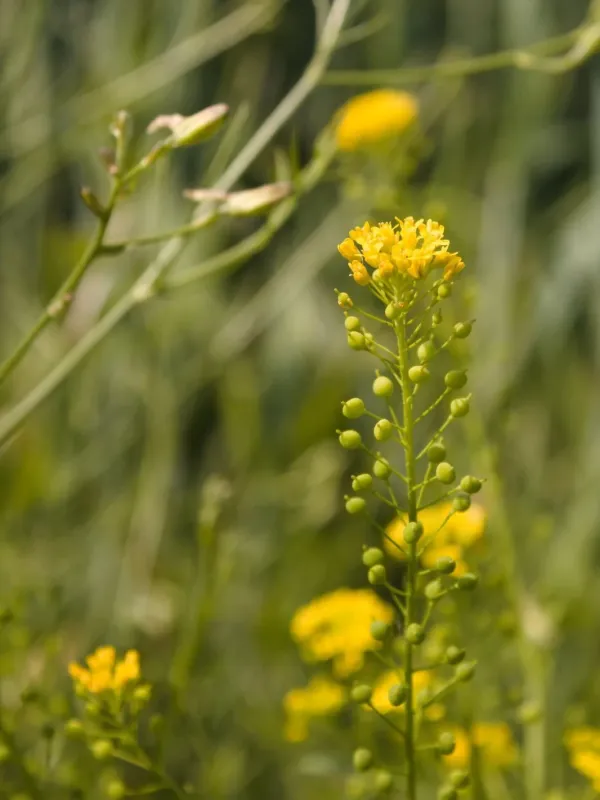
Ball mustard (Neslia paniculata) is an annual herb belonging to the Brassicaceae family. In agricultural contexts, it is primarily recognized as a weed species that infests small grain crops and open fields across temperate regions.
Botanically, it features a slender, branching stem reaching heights of up to 60 cm. The leaves are typically lanceolate and arrow-shaped, while the yellow flowers form distinctive, dense racemes that eventually turn into small, globular silicles, giving the plant its common name.
This species thrives in well-drained, fertile soils and is highly adaptable to various environmental conditions. It is particularly competitive in early spring, as it can germinate in cool soil temperatures before many crops have fully established their root systems.
The plant originates from the Eurasian continent but has naturalized globally in temperate zones. It favors open, disturbed habitats, which explains its frequent presence in industrial farmlands and roadside verges.
While ball mustard does not have direct agricultural use as a crop, it provides some nectar for pollinators in wild habitats. However, its negative impact as a crop competitor and seed contaminator far outweighs its ecological benefits in a farming environment.
Ball mustard is susceptible to several fungal diseases common to the mustard family, such as downy mildew and white rust. Its presence on the field serves as a reservoir for these pathogens, potentially impacting nearby cruciferous crops like canola or cabbage.
Typical insect pests include flea beetles and various species of aphids that feed on the foliage and reproductive structures. These pests can easily migrate from the weed to agricultural crops, causing significant yield losses.
Effective weed management relies on both cultural and chemical control strategies. Cultural methods involve early tillage to destroy seedlings before they reach the reproductive stage, preventing the seed bank from replenishing.
Chemical control is often necessary in heavy infestations. Applying selective herbicides during the early growth stages of the plant provides the best suppression, minimizing competition with the primary crop.
Rotation and sanitation are critical. Preventing the dispersal of seeds by cleaning equipment and maintaining clean fallow fields are essential steps for farmers looking to mitigate the long-term impact of this species on their land.