
Nephelium juglandifolium
Nephelium juglandifolium
Description
Growing requirements
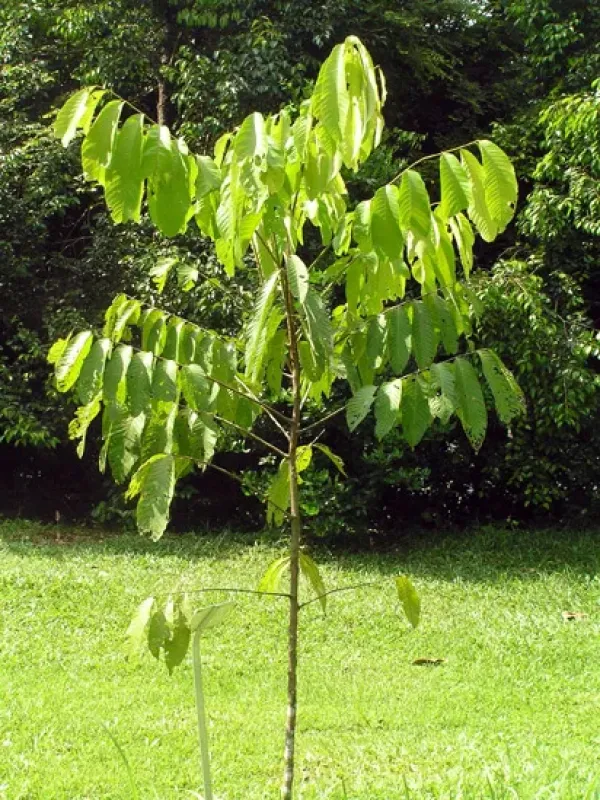
Nephelium juglandifolium is a perennial fruit-bearing tree belonging to the Sapindaceae family. Native to the humid tropical regions of Southeast Asia, it is botanically related to the more widely known rambutan.
The tree thrives in stable equatorial climates characterized by high annual temperatures and significant humidity. It is typically found in rainforest environments, where it grows as an understory or canopy tree depending on light availability.
Cultivation requires deep, fertile, and well-drained soils. Loamy textures are preferred to ensure both nutrient retention and adequate aeration, as the species is highly sensitive to root asphyxiation caused by waterlogging.
Agronomic management focuses on maintaining soil moisture while ensuring the root zone remains free of standing water. Protection from strong, drying winds is essential for young saplings to ensure proper establishment and leaf development.
Beyond its agricultural value, the tree is often used in mixed orchard systems. Its adaptation to partial shade allows for intercropping with other tropical species, contributing to the biodiversity and productivity of the farm.
Yield
The yield potential of Nephelium juglandifolium is primarily determined by tree age, genotype, and environmental conditions. Mature trees demonstrate a reliable cropping cycle when provided with balanced nutrient inputs.
Flowering is triggered by climate cues, and the fruit development period requires consistent moisture to prevent premature fruit drop. Efficient pollination is a prerequisite for achieving high-density fruit clusters.
Standard orchard management includes formative pruning to maintain a manageable tree size and to increase light penetration. This practice directly correlates with better flowering density and improved internal quality of the fruit.
Harvesting is typically conducted manually as the fruits reach their physiological maturity. Because the fruit is perishable, post-harvest handling must be swift to prevent quality degradation during transport.
Crop monitoring for pests and diseases is vital to protect the potential yield. Proactive scouting and integrated pest management strategies are highly effective in ensuring a successful harvest season each year.