
Italian catmint
Nepeta italica
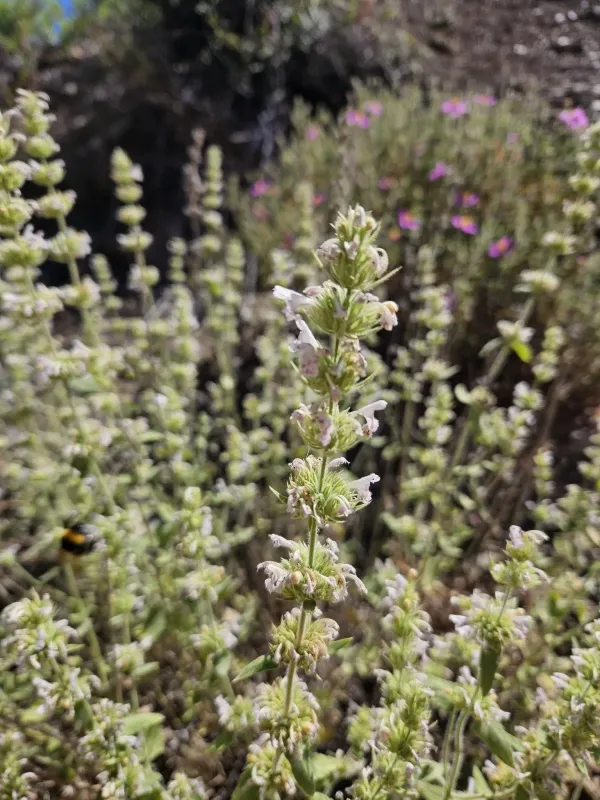
Description
Sowing dates
Italian catmint is typically sown in the spring as soon as the soil temperature reaches 8–10 degrees Celsius. Planting from late April to early May ensures that the seedlings have sufficient moisture during their initial establishment phase.
Autumn sowing is also an option, performed shortly before the first frosts. This allows the seeds to undergo natural stratification over the winter, often resulting in more vigorous and uniform germination once the spring warmth arrives.
The standard seeding rate ranges from 4 to 6 kilograms per hectare. For commercial production, row spacing should be maintained between 45 and 60 centimeters to facilitate efficient mechanical weed control and maintenance.
Seeds should be planted at a shallow depth of approximately 0.5 to 1 centimeter. Because the seeds are very small, it is essential to roll the soil surface after sowing to ensure proper contact and moisture absorption.
For those using nursery starts, seeds can be sown in greenhouse trays during March. Transplants are usually ready to be moved to the open field about 45 to 50 days after emergence, once the risk of spring frost has passed.
Growing requirements
Nepeta italica thrives in sunny environments and requires a location with full exposure to sunlight. Proper lighting is critical to ensure high concentrations of essential oils within the plant tissues.
The plant prefers well-drained, fertile sandy or loamy soils with a neutral pH. It struggles in heavy, waterlogged clay soils, which can lead to root decay and decreased vitality during the rainy season.
Italian catmint is known for its high drought tolerance, making it a suitable crop for regions with limited rainfall. Once established, the plants require minimal irrigation, though steady moisture during the active growth stage improves biomass yield.
Optimal growth temperatures fall between 20 and 25 degrees Celsius. The crop is relatively hardy but benefits from protection or mulch in areas with extremely cold, snowless winters to prevent root desiccation.
Good soil aeration is necessary for the development of a healthy root system. Regular cultivation between the rows keeps the soil structure loose and suppresses weed competition during the early stages of plant growth.
Yield
Average biomass yields for Italian catmint generally range from 10 to 15 tons per hectare of fresh material, depending on soil quality and the management of fertilizers. Peak production is typically seen from the second year onwards.
Dry matter yield is approximately 20–25 percent of the fresh weight. High-quality dry material is obtained when harvesting occurs at the precise developmental stage, which maximizes the aromatic profile of the crop.
Essential oil content in dry leaves ranges from 0.5 to 1.2 percent. The chemical composition is highly influenced by the harvest timing, with the highest oil concentrations occurring during the peak of the flowering period.
Applying balanced nitrogen-phosphorus fertilizers in early spring significantly boosts biomass production. However, caution should be taken not to over-apply nitrogen, as this can dilute the aromatic compounds and affect oil quality.
Under optimal conditions, two harvests per season are possible. The first cut is typically made at the start of flowering, while the second occurs towards the end of the summer, allowing for maximum seasonal efficiency.
Main diseases and pests
Aphids are the most common pests affecting catmint, as they tend to feed on young, succulent leaves. Biological controls, such as introducing beneficial insects, are preferred to maintain the organic purity of the harvested oil.
Root rot represents a major threat in soils with poor drainage. Pathogenic fungi thrive in waterlogged conditions, causing the plants to wilt rapidly and eventually die if the moisture levels are not corrected immediately.
Powdery mildew can manifest in humid climates with poor air circulation. Proper plant spacing and field sanitation are effective ways to mitigate the risk of fungal spread throughout the crop population.
Seed-feeding beetles may cause issues for growers harvesting seeds for propagation. Regular scouting of the fields during the reproductive stage is necessary to identify and treat any pest outbreaks early.
Strategic crop rotation is essential for disease prevention. Avoid planting catmint after other Lamiaceae family crops to minimize the risk of soil-borne pathogens accumulating in the planting site over consecutive years.
Harvesting
Harvesting should occur during the peak flowering phase to ensure the maximum content of aromatic components. At this stage, the plant exhibits the most potent scent and superior medicinal quality.
Mechanical harvesting is performed by cutting the plants at a height of 10–12 centimeters from the ground. Maintaining this stubble is crucial for the plant's health and successful overwintering for the following season.
Immediate processing or drying is vital after cutting. Leaving harvested material in the field under the sun leads to rapid oxidation and the evaporation of essential oils, significantly lowering the market value.
Drying is best accomplished in specialized drying rooms with good airflow at temperatures not exceeding 40 degrees Celsius. Higher temperatures may damage the delicate essential oil compounds.
Store dried material in airtight, light-protected containers within a cool, dry environment. Proper storage conditions allow the product to maintain its quality and potency for up to two years without significant degradation.