
California neokochia
Neokochia californica
Description
Growing requirements
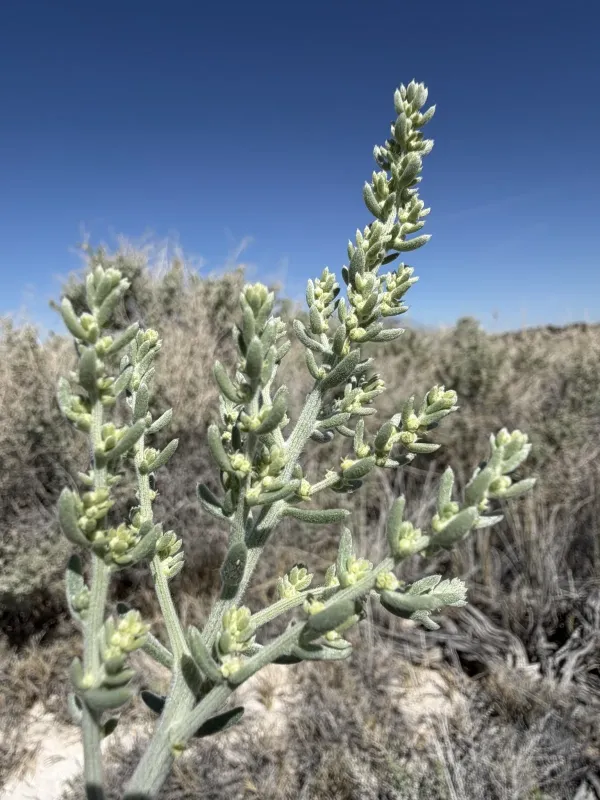
California neokochia (Neokochia californica) is a distinct member of the Amaranthaceae family. It is a succulent, salt-tolerant shrub native to the arid environments of the Southwestern United States, specifically adapted to desert ecosystems.
The plant thrives in regions where saline soil conditions and low precipitation make traditional farming challenging. It is characterized by its ability to extract moisture from deep soil layers, making it highly drought-resistant during peak summer temperatures.
Optimal growth conditions for this species require well-drained, alkaline soils. It performs best in open, sunny environments where soil salinity might inhibit the growth of standard forage grasses or legumes, effectively occupying niches in harsh landscapes.
The botanical structure includes small, fleshy leaves that minimize water transpiration. These adaptations allow the plant to maintain biomass production even under intensive heat and drought conditions, which are typical for its native habitat.
Agronomic management of California neokochia is minimal, focusing on establishing the crop in depleted or saline rangelands. It does not require significant inputs like fertilizers, as it is well-adapted to nutrient-poor and harsh soil chemistry.
Harvesting
The primary agricultural utilization of California neokochia is as a browse species for livestock in arid range areas. It provides a reliable source of supplemental forage when more palatable or less hardy vegetation has exhausted its seasonal growth cycle.