
Neohymenopogon parasiticus
Neohymenopogon parasiticus
Description
Growing requirements
Neohymenopogon parasiticus is a unique botanical species belonging to the Rubiaceae family. In its natural habitat, it functions primarily as an epiphyte, anchoring itself to the branches of trees in dense tropical forests where it benefits from the humid microclimate.
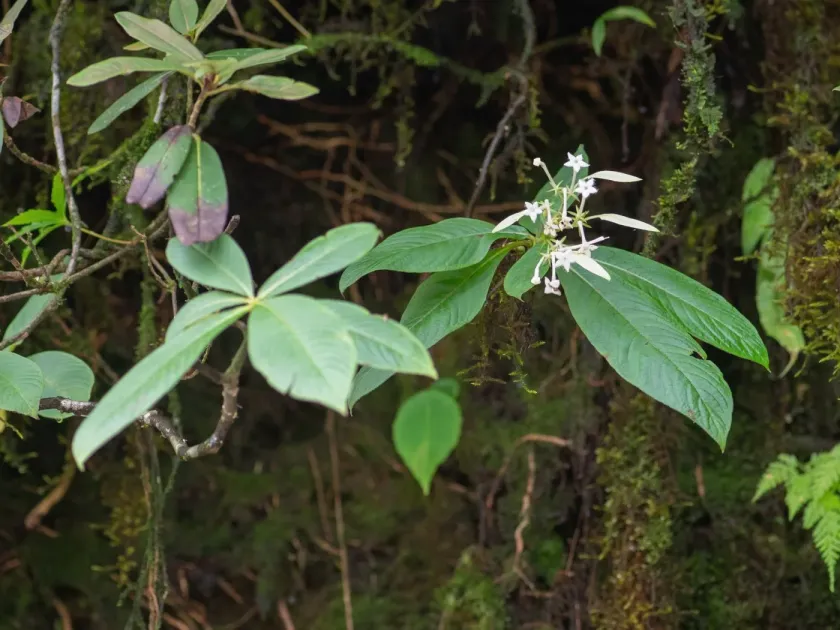
The morphology of this plant is strictly adapted to its epiphytic lifestyle. It features distinct foliage and inflorescences typical of the madder family, with a specialized root system designed not for terrestrial soil penetration, but for stabilizing the plant and absorbing moisture from the air and decaying bark.
Regarding its ecological requirements, the species demands high atmospheric humidity and relatively stable tropical temperatures throughout the entire year. It is highly sensitive to desiccation and direct, intense solar radiation, requiring a shaded environment to mimic the canopy structure of its native habitat.
From an agronomical perspective, Neohymenopogon parasiticus is not a commercial crop but rather a specimen for specialized conservatories. Cultivation requires an organic substrate composed of mosses and bark, ensuring excellent aeration and moisture retention without risking root rot.
The geographic distribution of this plant is focused on the tropical regions of Southeast Asia. Its growth cycle is deeply influenced by monsoon patterns, which provide the necessary pulses of moisture. Maintenance requires precise monitoring of salinity levels in water, as epiphytes are generally sensitive to nutrient imbalances.