
Neohenricia sibbettii
Neohenricia sibbettii
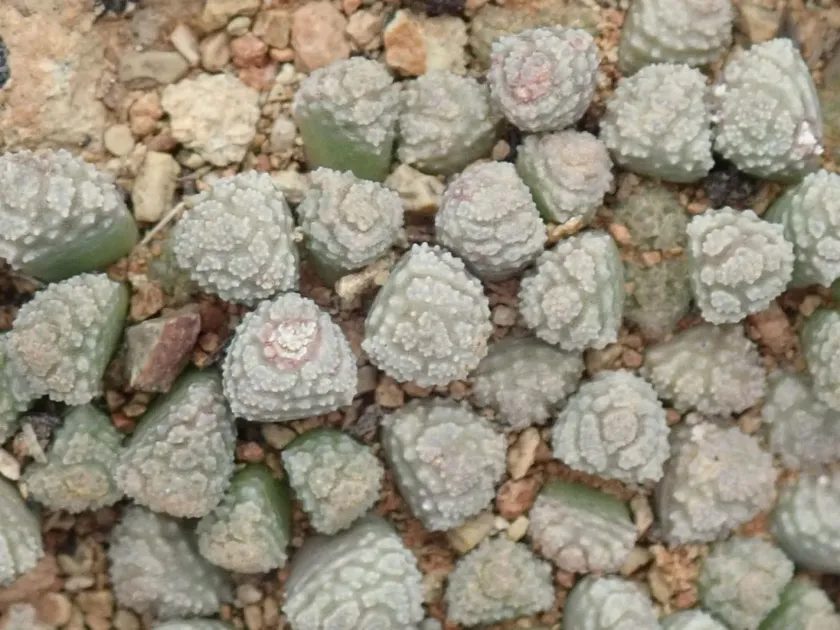
Description
Growing requirements
Neohenricia sibbettii is a unique succulent species belonging to the Aizoaceae family. Native to the arid landscapes of South Africa, this plant has adapted to survive in harsh, moisture-deprived environments where other vegetation fails to thrive.
This species is characterized by its cushion-forming growth habit, consisting of tiny, succulent leaves that clump together to minimize water loss. The plant is essentially a master of water storage, maintaining its hydration levels through specialized tissue structures within its leaves.
Successful cultivation depends on replicating its natural arid habitat. High-intensity light is crucial to maintain the compact growth form, while the substrate must be highly mineral, providing rapid drainage to prevent moisture accumulation near the roots.
During the growing season, the plant requires warmth and sporadic, deep watering rather than frequent light moisture. In the dormant winter phase, temperatures should be kept cool, and irrigation should be reduced to an absolute minimum to prevent rot.
While not a traditional agricultural crop, it is highly valued in the nursery industry and among succulent collectors for its aesthetic appeal and structural simplicity in rock garden or container arrangements.
Main diseases and pests
The most significant threat to Neohenricia sibbettii is root rot, caused by overwatering or soil mixes that hold moisture for too long.
Pests such as mealybugs can infiltrate the dense, matted foliage, making them difficult to spot until the plant begins to show signs of stress or yellowing.
Spider mites can also be a challenge if the environment becomes too hot and dry without adequate ventilation or airflow, damaging the surface of the leaves.
Pathogenic fungi can colonize the plant if damaged or stressed, leading to rapid tissue death and the loss of entire clumps if not treated immediately.
Management focuses on prevention through strict water control, the use of well-ventilated containers, and occasional preventative application of appropriate pesticides.