
Nemophila menziesii
Nemophila menziesii Hook. & Arn.
Description
Sowing dates
Nemophila menziesii, commonly known as Baby Blue Eyes, is an annual herbaceous plant belonging to the Boraginaceae family. It is typically grown by sowing seeds directly into the garden soil as the plant does not tolerate root disturbance well.
The best time to sow seeds is early spring, once the danger of hard frost has passed and the soil is workable. In regions with mild winters, autumn sowing can also be successful for earlier spring blooms.
Seeds should be covered with a very thin layer of soil, as they require some light to germinate effectively. Maintaining consistent moisture in the seedbed is crucial during the germination phase.
Once seedlings have developed their first set of true leaves, thinning is recommended to provide each plant with enough space to grow and spread properly. Crowding should be avoided to promote air circulation.
Successive sowing every few weeks can extend the blooming period throughout the season in cooler climates where the plants thrive without succumbing to intense heat.
Growing requirements
Nemophila menziesii performs best in partial shade, especially in areas with hot summers, where it needs protection from the harsh afternoon sun to keep blooming.
The ideal soil is well-draining, moist, and rich in organic matter. While the plant appreciates consistent moisture, it is sensitive to waterlogged soil, which can quickly lead to root rot.
Watering should be managed carefully to ensure the soil remains moist but not saturated. Drought stress will significantly reduce the quality and duration of the flowering period.
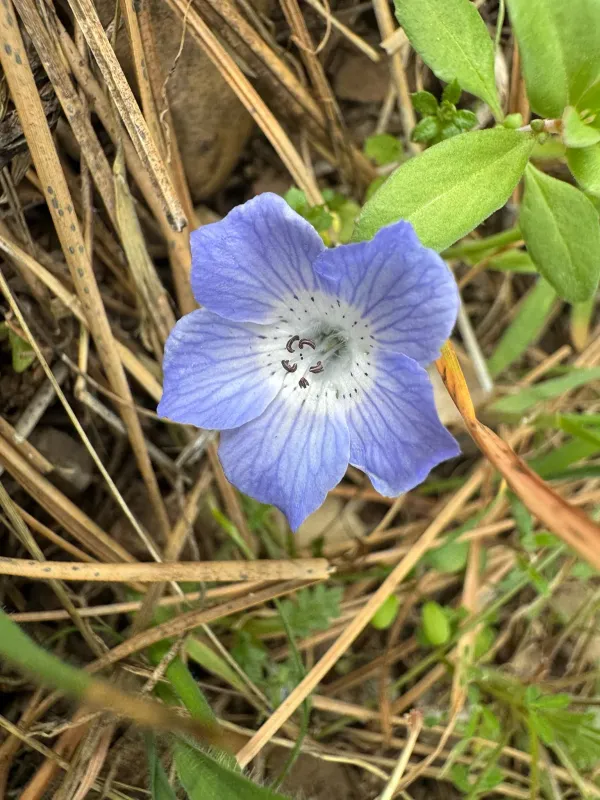
The plant is highly valued for its striking cup-shaped flowers, which are often blue with white centers. It prefers cooler weather conditions and typically declines once temperatures reach high summer peaks.
Minimal fertilization is required; a light application of a balanced, low-nitrogen fertilizer during the active growing phase is usually sufficient to encourage healthy development.
Main diseases and pests
Slugs and snails are the most significant pests for Nemophila, as they are attracted to the succulent-like foliage and can decimate young plants overnight.
Powdery mildew is a common fungal threat, particularly in damp or stagnant conditions where humidity levels remain high and air circulation is poor.
Root rot caused by pathogens in the soil usually occurs in overly wet conditions. Prevention is key, as treating established root decay is rarely successful in annuals.
Aphids can occasionally infest flower buds and tender shoots. Regular monitoring of the plants allows for quick intervention if pest populations begin to increase.
Effective management strategies include keeping the area around the plants free of debris and ensuring adequate spacing to prevent excessive humidity around the foliage.