
Nechamandra alternifolia
Nechamandra alternifolia
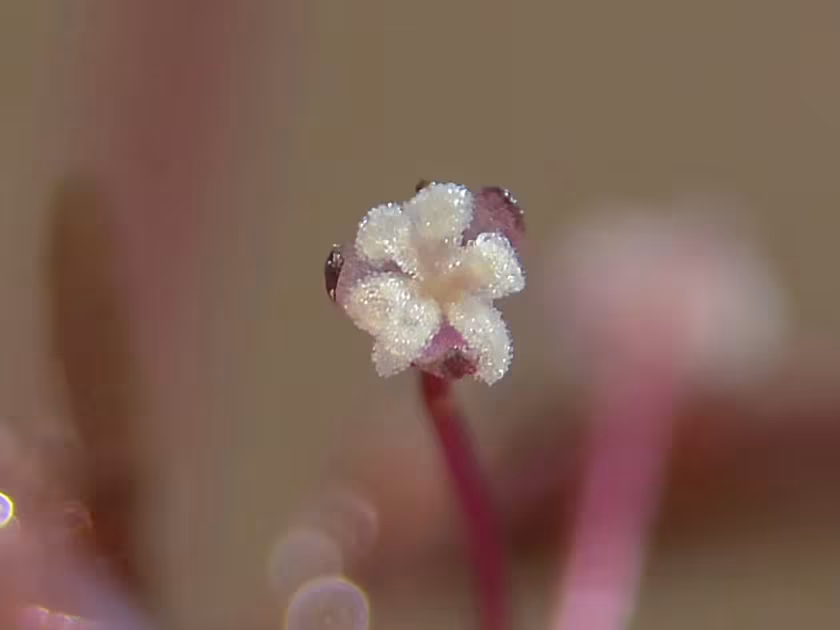
Description
Growing requirements
Nechamandra alternifolia is a submerged aquatic plant belonging to the Hydrocharitaceae family. It is a perennial species typically found in stagnant or slow-moving freshwater systems, where it remains rooted in the substrate.
Native to tropical and subtropical regions of Asia, specifically across the Indian subcontinent and Southeast Asia, it thrives in warm environments. It is often observed colonizing irrigation canals, ponds, and shallow margins of rice paddy fields.
The botanical structure is marked by elongated, slender stems with alternate, lanceolate leaves. This adaptation allows the plant to efficiently utilize nutrient-rich water while remaining fully immersed throughout its life cycle.
Cultivation requirements include a stable water temperature ranging from 22°C to 28°C and ample sunlight exposure. The substrate should ideally be nutrient-rich silt or loam to support root anchoring and secondary nutrient uptake.
In terms of agricultural and environmental utility, this species serves as a vital component in aquatic ecosystems by providing oxygenation and habitat for micro-fauna. It is sometimes utilized in controlled pond settings to maintain water clarity.
Main diseases and pests
Agricultural runoff containing high concentrations of nitrogen and phosphorus leads to excessive algae blooms, which significantly compete with Nechamandra alternifolia for available sunlight and space.
Chemical pollutants, particularly herbicides used in nearby crop management, are highly toxic to this plant species and can result in rapid necrosis of the submerged foliage.
Mechanical disturbances in water bodies, such as dredging or intense water flow changes, pose a physical threat by uprooting the delicate plants and causing severe sediment turbidity.
Herbivory by aquatic snails and certain larvae represents a persistent pressure that can lead to stem weakening and subsequent infection by opportunistic fungal pathogens.
Invasive non-native aquatic plants can easily outcompete this species by forming dense surface mats, thereby drastically reducing the photosynthetic efficiency required for the plant's survival.