
Nasturtiopsis coronopifolia
Nasturtiopsis coronopifolia
Description
Growing requirements
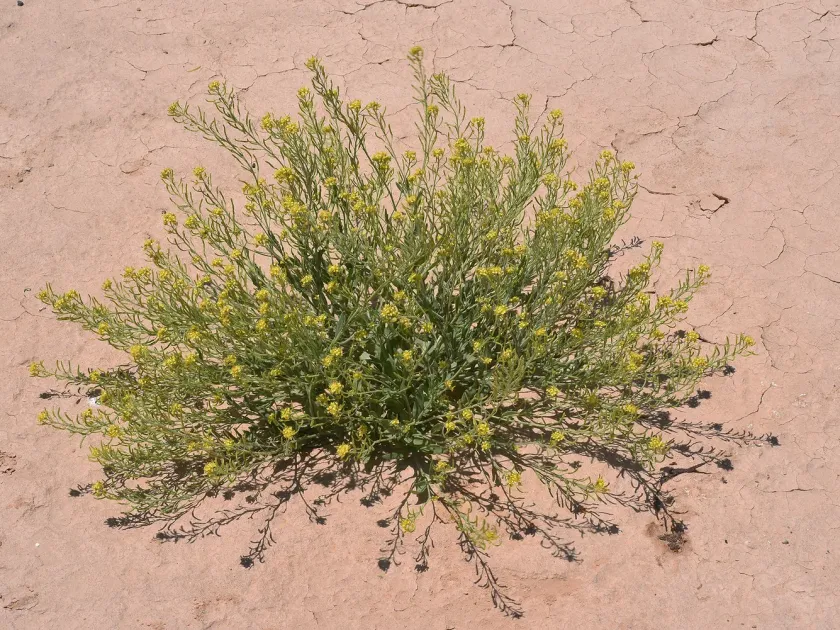
Nasturtiopsis coronopifolia is a herbaceous plant species belonging to the Brassicaceae family. It is native to arid and semi-arid zones, primarily distributed across Northern Africa and the Middle East, where it has evolved to thrive in challenging environmental conditions.
The plant exhibits remarkable xerophytic characteristics, allowing it to survive with minimal water input. It favors well-drained, sandy, or gravelly soils with a neutral to slightly alkaline pH, typical of its natural desert-like habitats.
Agricultural success depends on providing full sun exposure, as the species is highly sensitive to light competition. Efficient photosynthesis is crucial for the plant's metabolic processes and the accumulation of beneficial chemical compounds.
Thermal requirements focus on warm growing seasons with temperatures ranging from 18 to 25 degrees Celsius. While it handles heat well, excessive soil moisture during vegetative stages is detrimental and can lead to rapid physiological decline.
The economic value of this crop lies in its potential use in sustainable agriculture in arid regions, as well as its secondary metabolites which are of interest for various industrial and pharmaceutical applications.
Main diseases and pests
The species is primarily susceptible to common pests of the Brassicaceae family, such as flea beetles, which can cause significant damage to seedlings and young foliage if left uncontrolled.
Under humid conditions, the risk of fungal infections, including damping-off and mildew, increases significantly. Proper site selection and careful irrigation management are essential to mitigate these biological threats.