
Nannorrhops ritchieana
Nannorrhops ritchieana
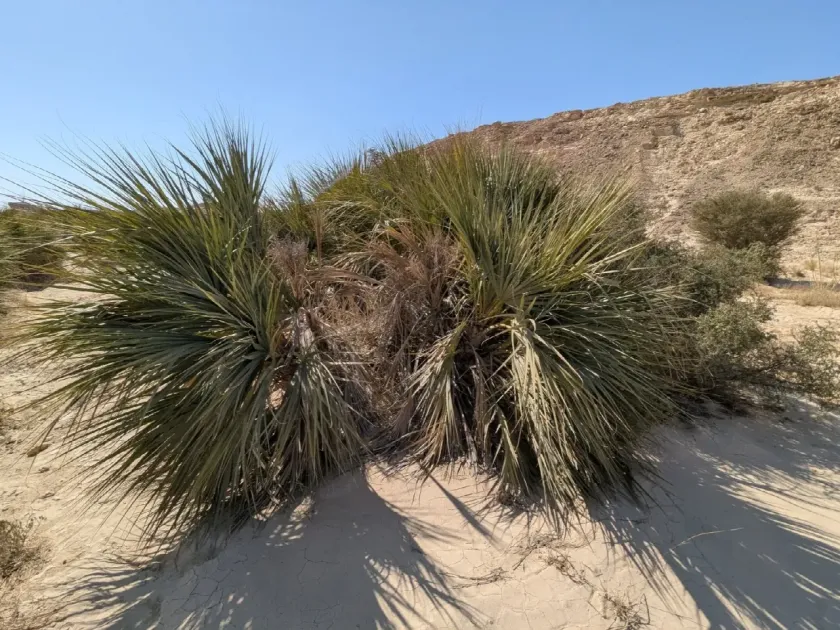
Description
Sowing dates
Propagation of Nannorrhops ritchieana is primarily achieved through seeds. These seeds require careful preparation, including scarification and warm-water soaking to enhance germination rates, which are naturally quite slow.
Seeds should be sown in a well-draining substrate, such as a mixture of sand and peat, to ensure adequate aeration and prevent early seed rot during the sensitive sprouting stage.
The optimal temperature for successful germination ranges between 25 and 30 degrees Celsius. Maintaining stable heat is crucial for the embryo to develop properly.
Vegetative propagation is also possible through the careful division of basal offshoots. This method is preferred in controlled environments to ensure the clone maintains the mother plant's characteristics.
Transplanting seedlings requires extreme care to avoid damaging the taproot system, which is vital for the plant's future resilience in arid environments.
Growing requirements
Nannorrhops ritchieana, a member of the Arecaceae family, is uniquely adapted to the harsh conditions of its native arid regions in Afghanistan, Pakistan, and Iran.
This palm species thrives in full sun and requires maximum light exposure. Insufficient light leads to etiolation, significantly weakening the plant's structural integrity.
It performs best in rocky or sandy soils that provide excellent drainage. Waterlogged conditions are detrimental to the plant and must be strictly avoided to prevent root diseases.
The species is renowned for its cold hardiness, being one of the few palms that can withstand occasional freezing temperatures without suffering significant damage.
Due to its native climate, the plant exhibits exceptional drought tolerance, making it an ideal choice for xeriscaping and agricultural use in water-limited areas.
Yield
The main commercial and utility value of Nannorrhops ritchieana lies in its leaves, which are harvested to extract strong, durable fibers used in traditional weaving.
Farmers harvest leaves selectively, ensuring that the plant's growth point remains intact, which allows for sustained annual yields over many years.
The fibers derived from this palm are prized for their resistance to moisture and wear, making them suitable for crafting ropes, baskets, and mats.
Beyond fiber production, the palm serves as an important ornamental and landscape plant, contributing to the agricultural economy by being grown on marginal lands.
Efficiency is maintained through low input costs, as the plant requires minimal fertilization and protection once it is fully established in the environment.
Main diseases and pests
The primary threats to this culture are fungal pathogens such as root rot and leaf spot, which are almost exclusively triggered by improper irrigation and poor soil drainage.
While generally robust, the palm may occasionally attract pests like spider mites or mealybugs when kept in poorly ventilated indoor or greenhouse conditions.
Over-fertilization can weaken the natural defense mechanisms of the plant, making it more susceptible to opportunistic diseases that thrive in high-humidity environments.
Proactive management involves ensuring good air circulation and removing dead or dying leaves promptly to eliminate potential breeding grounds for pathogens.
Regular monitoring of the root zone is the most effective way to prevent catastrophic failure, as early detection of rot is essential for saving the specimen.
Harvesting
Harvesting is performed by hand using sharp, sanitized tools to cut the leaves at their base, ensuring minimal physical impact on the main body of the palm.
The timing of the harvest is critical; leaves must be fully mature to provide fibers with the necessary tensile strength required for high-quality utility products.
Once collected, the leaves are typically dried in the shade to prevent the fibers from becoming brittle due to excessive UV radiation and heat exposure.
Sorting the raw material based on fiber length and leaf quality is a standard procedure that optimizes the final processing efficiency for artisans.
Sustainable harvesting cycles promote healthy regrowth and ensure the longevity of the plant, which is vital for the continuous productivity of the palm plantation.