
Nananthea perpusilla
Nananthea perpusilla
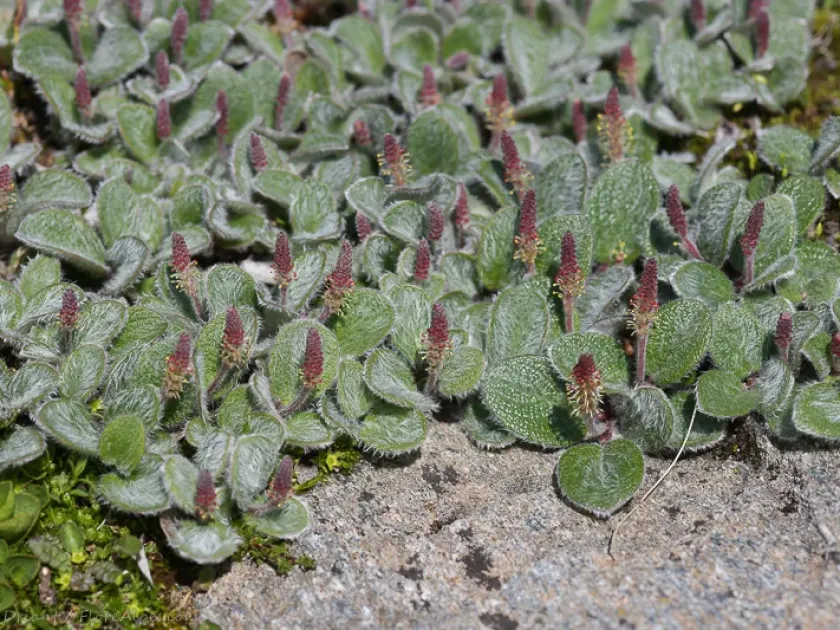
Description
Growing requirements
Nananthea perpusilla is a unique, small-sized herbaceous plant belonging to the Asteraceae family. It is recognized for its compact growth habit and its status as a specialized botanical rarity.
The plant is strictly endemic to the Mediterranean islands of Sardinia and Corsica. It has evolved to survive in highly specific micro-environments, often associated with granite rocks and rocky crevices.
Regarding soil requirements, the species thrives in nutrient-poor, rocky, and well-drained substrates. It does not require high levels of moisture, as it is physiologically adapted to Mediterranean climatic patterns.
Climatic requirements are defined by long, dry, and hot summers, coupled with mild, damp winters. The plant requires full exposure to sunlight and cannot tolerate competition from taller vegetative species.
From an agricultural standpoint, the plant is not cultivated. Its value lies primarily in ecological conservation and the study of endemic biodiversity within island ecosystems.
Main diseases and pests
The main threats to Nananthea perpusilla include habitat destruction caused by overgrazing and the expansion of tourism infrastructure in the delicate coastal areas of its range.
Climate change poses a significant risk, as alterations in rainfall patterns may affect the survival of the plant during the critical growth phases in spring.
Invasive plant species can outcompete Nananthea perpusilla, especially in areas where soil stability is affected by erosion or human activity.
No specific agricultural pests or diseases have been documented, as the species does not interact with commercial crop systems and survives in isolation.
The long-term survival of the species relies on protected area management to ensure the preservation of its natural, undisturbed habitats in Sardinia and Corsica.