
Myrteola nummularia
Myrteola nummularia
Description
Growing requirements
Myrteola nummularia is a perennial evergreen creeping shrub belonging to the Myrtaceae family. It is native to the southern regions of South America, thriving naturally in the damp, cool environments of temperate rainforests and moorlands.
The plant requires specific climate conditions characterized by high atmospheric humidity and moderate temperatures. It is sensitive to intense heat and direct sunlight, favoring shaded or semi-shaded locations that simulate its natural habitat.
Successful cultivation depends on acidic, well-draining soils rich in organic matter. While the plant loves moisture, it is imperative to prevent waterlogging, which can quickly lead to the decline of its delicate root system.
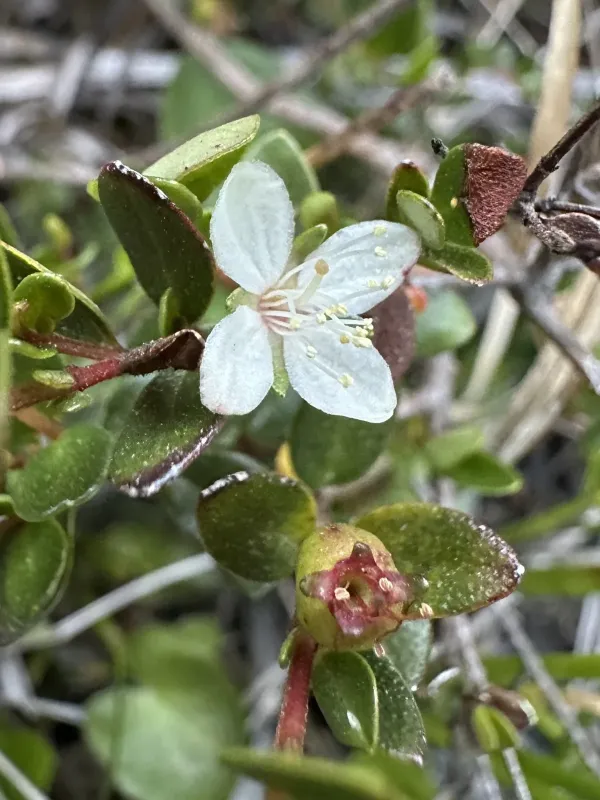
Botanically, it is known for its small, coin-shaped leaves and modest white to pinkish solitary flowers. It spreads along the ground, forming dense, attractive mats that can serve as both a groundcover and a productive fruit-bearing crop.
Its primary agricultural use is the harvesting of its edible berries, which are cherished for their unique taste profile. Additionally, the plant has potential as an ornamental groundcover in regions that can accommodate its specific requirements.
Main diseases and pests
Common pests for Myrteola nummularia include scale insects and mealybugs, which tend to infest the plant when environmental conditions, particularly humidity, fluctuate or fall below optimal levels.
Fungal pathogens represent the most significant threat to the crop, especially in poorly ventilated environments. Root rot and damping-off can occur if the soil structure does not provide adequate aeration.
Leaf spot diseases may appear during periods of excessive rainfall or stagnant air, requiring producers to maintain proper spacing between individual plants to ensure sufficient airflow throughout the crop.
Integrated pest management strategies are recommended, focusing on maintaining plant vigor through proper fertilization and watering regimes rather than relying solely on chemical intervention.
Regular monitoring of the foliage and root zone is essential for early detection of issues. A proactive approach to soil health and sanitation is the most effective way to protect the harvest from common horticultural diseases.