
Cape beech
Myrsine melanophloeos
Description
Growing requirements
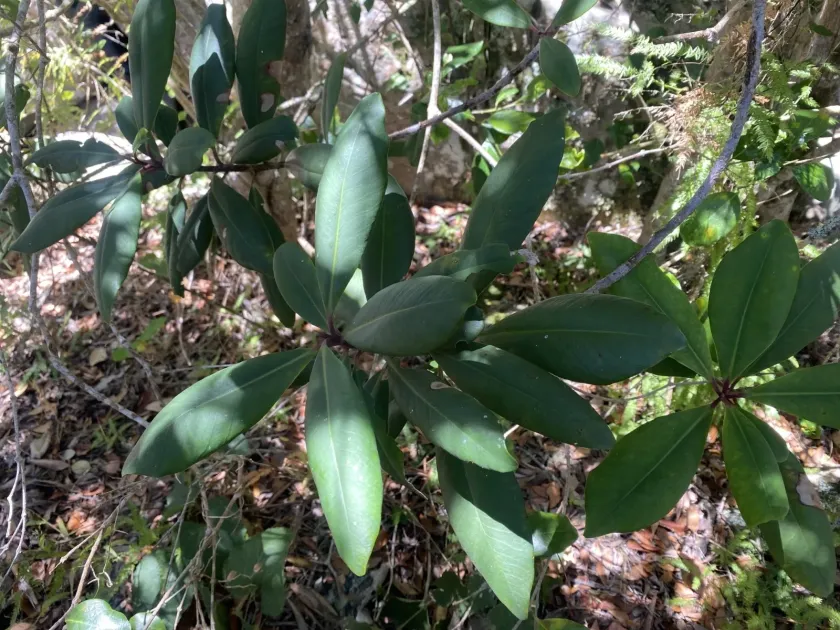
The Cape beech (Myrsine melanophloeos) is a robust evergreen tree that belongs to the Primulaceae family. It is widely recognized for its dense, glossy foliage and its architectural value in various landscapes.
Native to Southern Africa, this species naturally occurs in Afromontane forests and along riverbanks. It thrives in regions with consistent rainfall and temperate climatic conditions.
To ensure successful cultivation, it requires well-drained soil rich in organic matter. While it is adaptable, it performs best in soils that maintain moisture without becoming waterlogged.
The tree prefers a sunny to semi-shaded position. In its early years, it benefits from light protection from direct intense sunlight to allow the root system to establish effectively.
Economically, the wood is valued for its texture and durability, traditionally used in woodworking and light construction. Beyond utility, it is a preferred species for parkland reforestation and creating screen hedges.
Main diseases and pests
Pest management is a key aspect of maintaining a healthy Cape beech. Common threats include scale insects and mealybugs, which tend to cluster on the undersides of leaves and along tender stems.
Fungal pathogens such as leaf spot are likely to occur if the canopy becomes too dense or if the local humidity remains high for extended periods during the growing season.
Regular monitoring of the foliage is essential to detect early infestations. If pests are spotted, localized treatment with horticultural soaps or oil-based sprays can be highly effective.
Good air circulation is the best preventative measure against fungal infections. Strategic pruning helps open the canopy, allowing sunlight and air to reach the inner foliage.
Avoiding over-irrigation is critical, as excessive soil moisture can predispose the tree to root rot, which is often difficult to treat once it becomes systemic.