
Myrmephytum selebicum
Myrmephytum selebicum
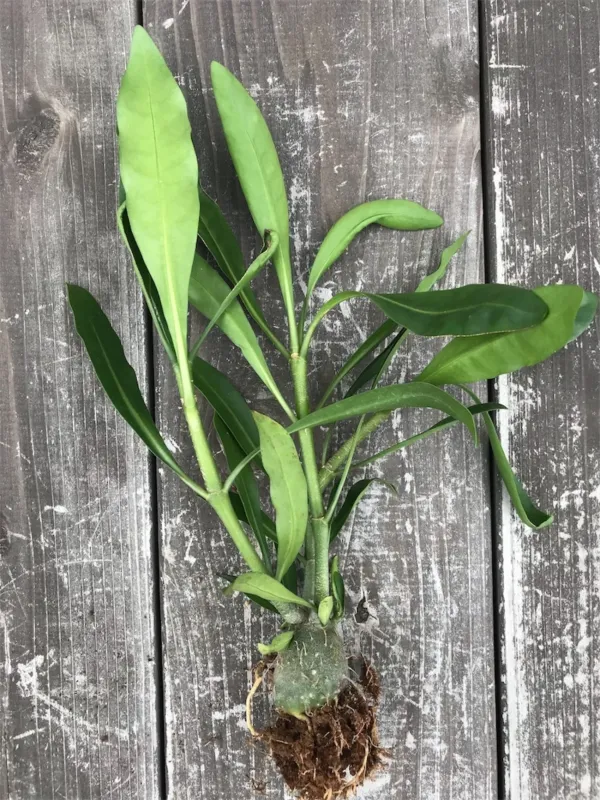
Description
Growing requirements
Myrmephytum selebicum is an intriguing member of the Rubiaceae family, native to the tropical rainforests of Sulawesi. It is classified as an epiphyte, meaning it naturally grows attached to the trunks or branches of forest canopy trees.
This species is well-known for its myrmecophily, meaning it forms a symbiotic relationship with ants. The plant develops a specialized, swollen caudex with internal cavities that provide nesting space for ant colonies, which in turn provide nutrients and protection to the plant.
Successful cultivation requires a climate that mimics the high humidity and stable temperatures of its native range. A temperature range between 22°C and 28°C is ideal, and humidity levels should remain consistent, ideally above 75%, to prevent the foliage from drying out.
The substrate must be specifically designed for epiphytes, providing excellent drainage. A mix of orchid bark, sphagnum moss, and perlite works best. This ensures the roots have access to oxygen, which is critical for preventing root rot in these sensitive plants.
Light requirements for Myrmephytum selebicum include bright, filtered light. Direct sun should be avoided at all costs, as it can quickly cause scorching of the caudex and leaves. Growing them under artificial LED lights or near bright, shaded windows is recommended for greenhouse settings.
Main diseases and pests
The primary threats to this plant are fungal pathogens resulting from overwatering or stagnant air. Proper ventilation is essential, and the growing medium should be allowed to dry slightly between waterings to prevent the development of decay within the caudex chambers.
Common pests include spider mites and mealybugs, which thrive in low-humidity environments. Regularly misting the plant and inspecting the junctions between the leaves and the caudex will help in early detection and management of any pest infestations.