
Myrceugenia franciscensis
Myrceugenia franciscensis
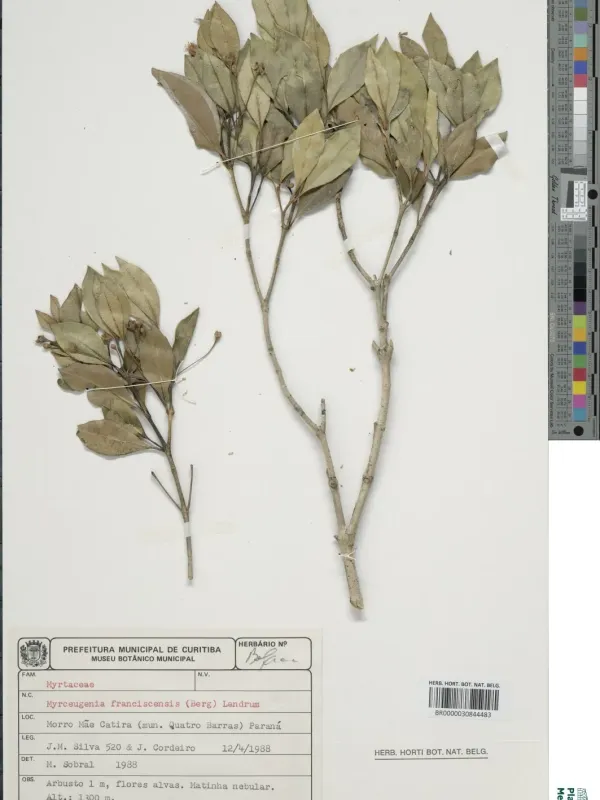
Description
Growing requirements
Myrceugenia franciscensis is a botanical species within the Myrtaceae family, native to the Atlantic coastal forests of Brazil. It typically grows as an evergreen shrub, thriving in humid forest environments.
This species requires a stable subtropical climate to flourish. It lacks significant cold tolerance, making it suitable for cultivation primarily in frost-free regions or in protected garden structures during colder seasons.
The ideal soil for this plant is well-drained, nutrient-rich, and slightly acidic. It is imperative to avoid waterlogged conditions, which significantly increase the risk of root pathogens and eventual decline.
Regarding light, it prefers partial shade or dappled sunlight. Providing an environment with high atmospheric humidity is crucial, as the plant suffers from dehydration in dry, arid climates.
Botanically, it features leathery, opposite leaves and flowers characteristic of the Myrtle family, often followed by small, palatable berries that are of local ecological and culinary significance.
Main diseases and pests
The plant is susceptible to various fungal pathogens, particularly root rot, which is common in poorly aerated or overly saturated soil. These diseases can quickly kill a specimen if not addressed early.
Scale insects represent a major threat to the foliage and stems. They feed on plant sap, leading to stunted growth and providing a substrate for sooty mold to develop on the leaves.
Spider mites are common in greenhouses or dry environments, causing discolored, speckled leaves and fine webbing. They are particularly active during warm, low-humidity conditions.
To maintain plant health, regular pruning is recommended to ensure adequate airflow within the crown. This practice helps prevent moisture pockets where fungi typically thrive.
Integrated pest management, including the use of neem oil or insecticidal soaps, is often sufficient for minor infestations, provided that the overall environmental conditions remain favorable for the plant.