
Mutellina purpurea
Mutellina purpurea
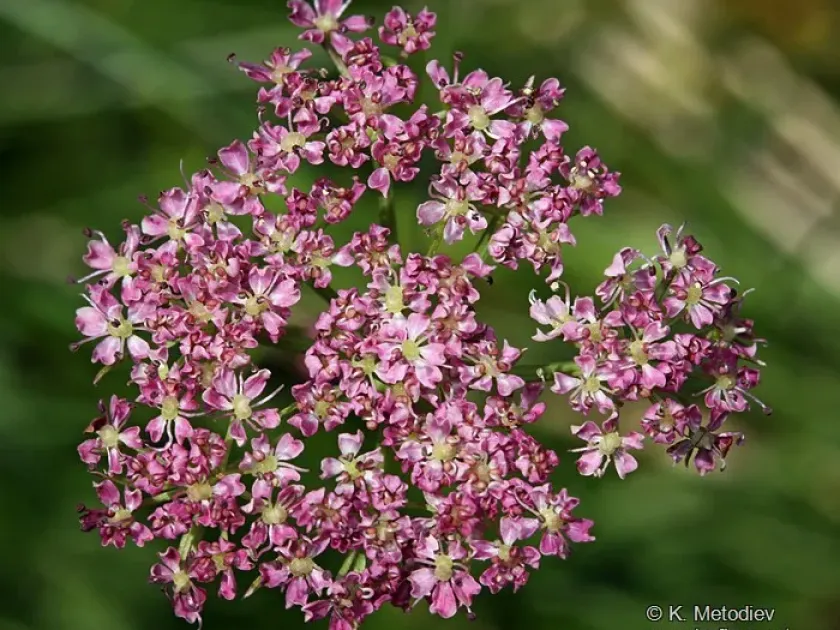
Description
Sowing dates
Mutellina purpurea, a member of the Apiaceae family, is an alpine perennial that thrives in specific soil conditions. In agricultural cultivation, the most effective sowing method involves autumn planting, allowing the seeds to undergo natural stratification throughout the winter months.
For those opting for spring sowing, seeds must be subjected to artificial cold stratification for a minimum of 8–10 weeks. This process is essential to break dormancy and ensure uniform germination across the field.
Seeds should be sown at a depth of 1–1.5 cm in a finely prepared seedbed. The soil must remain consistently moist during the germination phase, as the seeds and emerging seedlings are highly sensitive to desiccation.
In field settings, maintaining a row spacing of 45–60 cm is recommended. This layout not only facilitates mechanical weeding and cultivation but also ensures adequate airflow, which is critical for reducing fungal disease pressure.
Establishment is relatively slow, with the plant spending its first season focusing on root system development and foliage production. Providing a weed-free environment during this initial establishment phase is paramount for success.
Growing requirements
As an alpine species, Mutellina purpurea prefers cool, temperate climates. In lowland agricultural regions, it is beneficial to select sites with partial shade or protection from the intensity of midday summer sun.
The plant demands well-drained, nutrient-rich soils. While it can tolerate a range of soil types, a loamy soil with high organic matter content and a neutral to slightly acidic pH (6.0–7.0) is considered ideal for optimal growth.
Water management is critical; while the plant requires consistent moisture to thrive, it is extremely intolerant of waterlogged conditions. Adequate drainage, potentially through the use of raised beds, is necessary in heavier soil types.
Nutrient requirements are modest; excessive nitrogen fertilization should be avoided as it may promote vegetative growth at the expense of the essential oils and medicinal compounds stored in the roots.
The species demonstrates good cold hardiness but can be susceptible to heat stress. Providing mulch can help maintain stable soil temperatures and moisture levels throughout the growing season.
Yield
The primary economic output of Mutellina purpurea is its medicinal root, which contains specialized volatile compounds. Yield potential is realized from the third year onwards, once the plant has fully matured.
Harvesting timing is dictated by the plant's seasonal cycle, with the highest concentration of active ingredients found in the roots at the end of the second or third growing season. Sustainable management allows for multi-year harvests.
Productivity metrics are largely dependent on the density of the planting and the consistency of the microclimate. A well-maintained plantation can remain productive for several consecutive years.
Post-harvest quality control is vital for marketability. Ensuring that the roots are free from impurities and that drying processes are strictly monitored directly influences the final concentration of medicinal components.
In commercial operations, rotating crops and integrating cover crops during the pre-planting phase can help maintain soil fertility and ensure steady yields over the lifespan of the plantation.
Main diseases and pests
Fungal pathogens represent the most significant threat to Mutellina purpurea, particularly root rots and damping-off disease in young seedlings. These issues are almost always linked to poor drainage or excessive soil moisture.
Powdery mildew can affect the foliage during periods of high humidity and stagnant air. Strategic planting density and regular inspection are the best preventive measures to mitigate these outbreaks.
Soil-dwelling pests, such as grubs or larvae, may occasionally feed on the taproots, weakening the plant. Biological controls or integrated pest management strategies are preferred over chemical pesticides to preserve herb quality.
Aphids can also be problematic, colonizing tender new growth and floral stalks. Prompt identification and the use of insecticidal soaps or targeted biological agents can keep infestations within manageable limits.
Maintaining a clean cultivation area and removing infected plant tissue immediately are essential practices for preventing the spread of diseases within the field.
Harvesting
Harvesting is conducted during the autumn dormancy period when the plant directs its energy reserves back into the roots. This usually occurs after the first frosts when the above-ground foliage begins to senescence.
Mechanical harvesting requires careful calibration to prevent root damage, which can lead to rapid post-harvest degradation. Hand-harvesting or modified root-diggers are commonly used for smaller, high-value plots.
Once harvested, the roots must be thoroughly washed to remove soil debris. Subsequent processing involves trimming lateral rootlets and ensuring the main taproots are cleaned without causing abrasion.
The drying phase is a critical step; temperatures should be maintained between 35°C and 40°C in controlled drying rooms. This prevents the loss of volatile essential oils while ensuring the final product is shelf-stable.
Final storage should be in cool, dark, and dry conditions. Proper ventilation within storage containers is necessary to prevent any residual moisture from encouraging mold growth in the harvested product.