
Medlar
Mespilus germanica L.
Description
Sowing dates
Medlar (Mespilus germanica L.), a member of the Rosaceae family, is a deciduous tree or large shrub. The species is primarily propagated by grafting onto hawthorn, quince, or pear rootstocks to accelerate fruit bearing, although seed propagation is also possible.
Medlar seeds have a deep dormancy period and require mandatory stratification for 3–6 months at low temperatures. When propagating via seeds, sowing in open ground or containers is conducted in autumn so that seedlings emerge the following spring.
Planting saplings in their permanent location is carried out in early spring or autumn during the plant's dormant phase. The optimal planting pattern involves a spacing of 4–5 meters between trees, ensuring sufficient nutrient area for root system development.
Formative pruning is performed at a young age to establish a strong crown structure. In later years, the plant requires only sanitary pruning to remove dead or damaged branches, as the tree exhibits slow vegetative growth rates.
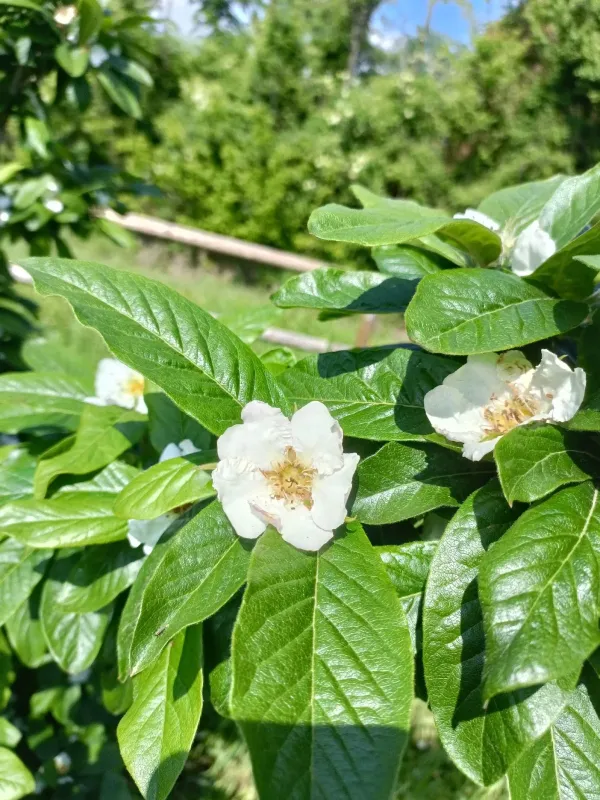
The medlar is noted for its high ornamental value throughout the entire season, making it a popular choice not only as an agricultural crop but also in landscape design for gardens and public park areas.
Growing requirements
The crop prefers sunny, wind-protected sites but can tolerate light shade. Mespilus germanica is significantly more frost-hardy than its Japanese relative, capable of withstanding temperatures as low as -25°C.
Regarding soil conditions, the tree is moderately demanding and thrives best in deep, fertile, and well-drained loams. Waterlogging in the root zone is strictly avoided, as it can trigger the development of root rots.
The optimal soil pH range is between 6.0 and 7.5. The tree is drought-tolerant, but to achieve high-quality yields during hot periods, regular watering is essential, especially during the fruit-set phase.
Agronomic management includes systematic cultivation of the soil around the tree base and mulching to retain moisture. The application of mineral and organic fertilizers is carried out in spring during the period of intensive shoot growth.
The tree is sensitive to sudden spring temperature fluctuations; therefore, in northern cultivation regions, it is recommended to select sites with southern exposure, shielded by building walls or hedges.
Yield
The productivity of Mespilus germanica depends on the age of the tree and the quality of agronomic practices. Grafted plants begin to bear fruit 3–4 years after planting, whereas seedlings may take 6–8 years to produce their first harvest.
The fruits are pome fruits with a characteristic wide, persistent calyx. At technical maturity, they are firm and high in tannins, making them unsuitable for consumption immediately after harvesting directly from the tree.
To improve flavor, the fruit must undergo a process of "bletting" or natural fermentation. After exposure to low temperatures, the flesh softens, becomes sweet, and develops a specific, pleasant aroma.
Agricultural use includes processing the fruit into jams, jellies, preserves, liqueurs, and wine. The balance of organic acids and sugars allows the fruit to be stored in cool conditions for several months.
Average yield for a single mature tree can range from 20 to 50 kilograms of fruit, depending on the specific cultivar, climatic zone, and the intensity of orchard maintenance.
Main diseases and pests
Medlar is relatively resistant to most garden pathogens, but it can be susceptible to fungal diseases common to the Rosaceae family. Fire blight is the most serious threat, causing the wilting of shoots and leaves.
In conditions of high humidity, scab can develop on leaves, negatively affecting the aesthetic quality of the fruit and causing premature leaf drop. Timely pruning is recommended to ensure proper airflow within the crown.
Pests such as aphids and leaf rollers may parasitize the plant, feeding on young foliage early in the season. In cases of massive infestations, insecticide treatment is applied before the flowering stage.
Fruit damage can be caused by the codling moth, which bores into the developing fruit. Regular removal of fallen fruit from the orchard floor significantly reduces the risk of recurrent infestations.
Integrated plant protection includes the use of biological agents and strict adherence to agrotechnical norms, enabling the production of environmentally friendly fruit without excessive chemical usage.
Harvesting
Harvesting of medlar is conducted as late as possible, typically in October or November, before the onset of severe frost. Fruits should be fully formed but remain dense and firm at the time of picking.
The harvesting technique involves carefully removing fruits with their stalks to prevent mechanical injury. Specimens that have fallen to the ground are generally unsuitable for long-term storage.
Post-harvest, the crop is kept in a dry, cool area for the bletting process. The ripening of the fruit takes time—ranging from a few weeks to a month—during which starches in the flesh convert into sugars.
Storage is performed in wooden crates at temperatures around 0...+5°C. It is critical to avoid excessive moisture in the storage container to prevent mold development on the fruit skin during the fermentation stage.
With proper organization of the harvesting and storage process, medlar retains its nutritional properties and flavor characteristics throughout the winter, providing vitamin-rich produce until spring.