
Musa troglodytarum
Musa troglodytarum
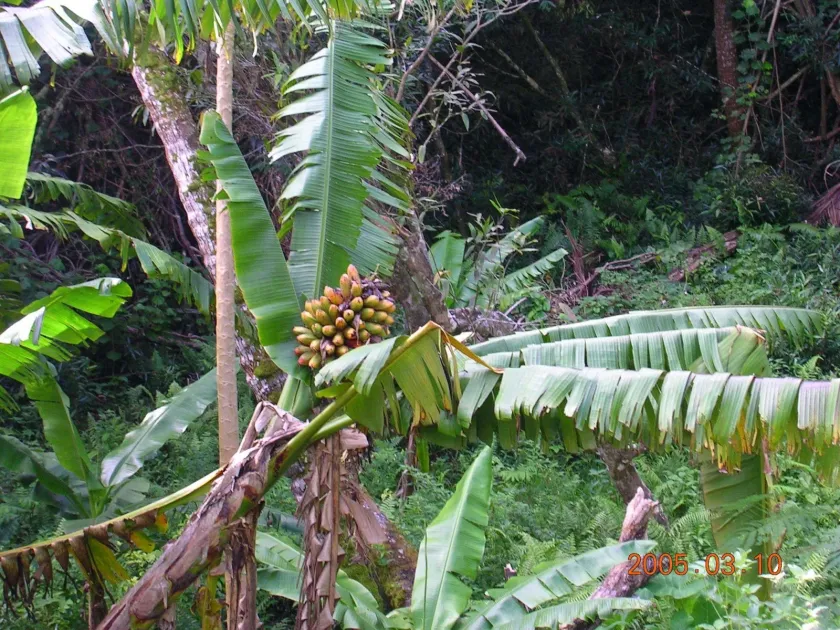
Description
Sowing dates
Propagation of Musa troglodytarum is primarily vegetative, utilizing offsets or "suckers" removed from the parent plant. Planting is best timed with the onset of the rainy season to ensure sufficient moisture for rapid root establishment.
Proper spacing is crucial for this robust plant; growers typically maintain an interval of at least 3 to 4 meters between stools. This ensures adequate access to sunlight and airflow, reducing the risk of pest proliferation.
Soil preparation involves deep tilling and the incorporation of organic matter, such as compost or manure, to enrich the site with essential nutrients prior to planting the suckers.
The planting hole should be wide enough to accommodate the rhizome comfortably, allowing for quick expansion and the development of a healthy root system in the initial growth stages.
Frequent monitoring during the first few weeks is necessary to confirm that each plant is taking root successfully and to address any early signs of transplant shock through supplemental watering.
Growing requirements
As a tropical species, this banana requires a warm, humid environment with consistent temperatures between 24°C and 30°C throughout the year to achieve optimal growth rates.
The plant thrives in regions with high relative humidity and benefits significantly from shelter against strong winds, which can easily tear the large, fragile leaves and reduce photosynthetic efficiency.
Well-draining, fertile soil is a strict requirement, as these plants are highly intolerant of waterlogged conditions that can cause rhizome decay and fungal diseases.
While the plant requires high light intensity for fruit production, establishing a microclimate with some partial shade during the peak of the day can protect young leaves from burning.
Nutrient management is essential, with a focus on potassium-rich fertilizers, which are vital for supporting the weight of the developing fruit bunches and overall plant vigor.
Yield
The yield of this species is highly prized for its unique culinary qualities, particularly the high starch content and the distinct reddish-orange hue of the fruit pulp.
Under favorable conditions and with proper management, a plant can produce significant bunches, though total yield is influenced by the genetic clone and the quality of soil management.
The growth cycle from planting to harvest typically lasts between 12 and 18 months, depending on the altitude and the specific regional climate where the crop is grown.
Thinning out redundant suckers is an important agronomic practice that allows the plant to focus its energy on a single, primary bunch, resulting in larger and more uniform fruit.
High-quality yields are often achieved by protecting the developing fruit bunches with special covers, which prevent insect damage and help maintain the fruits' clean appearance.
Main diseases and pests
Fusarium wilt remains the most devastating fungal disease for this crop, as it obstructs the plant's vascular system, leading to rapid yellowing and death of the entire plant.
The banana weevil is a primary pest, with larvae causing significant damage by tunneling into the rhizome, which weakens the base and makes the plant prone to falling in windy conditions.
Leaf spot diseases like Sigatoka reduce the leaf surface area available for photosynthesis, significantly impacting the size and maturity of the fruit bunches if left untreated.
Effective pest management relies on strict sanitation, such as removing infested plant debris and using disease-free suckers for all new plantings on the farm.
Integrated pest management strategies, including the use of beneficial soil microbes and trap crops, provide sustainable solutions for controlling infestations without excessive chemical use.
Harvesting
Harvesting is performed by carefully cutting the bunch from the stalk using a sharp knife, while a second person supports the weight to prevent the stem from snapping or the fruit from bruising.
The fruits are harvested at technical maturity when they are fully formed, but still firm and green, which is the optimal state for transport and later domestic consumption.
Immediate handling after harvest involves transferring the bunches to a shaded, well-ventilated packing area to prevent heat stress and premature ripening during transit.
Post-harvest selection and grading ensure that only clean, undamaged bunches are sent for local distribution, as any mechanical damage reduces the shelf life of the fruit.
After the fruit has been harvested, the exhausted pseudostem is typically cut back to the ground, allowing the plant's energy to be redirected to the next generation of suckers coming from the rhizome.