
Murdannia loriformis
Murdannia loriformis (Hassk.) R. S. Rao & Kammathy
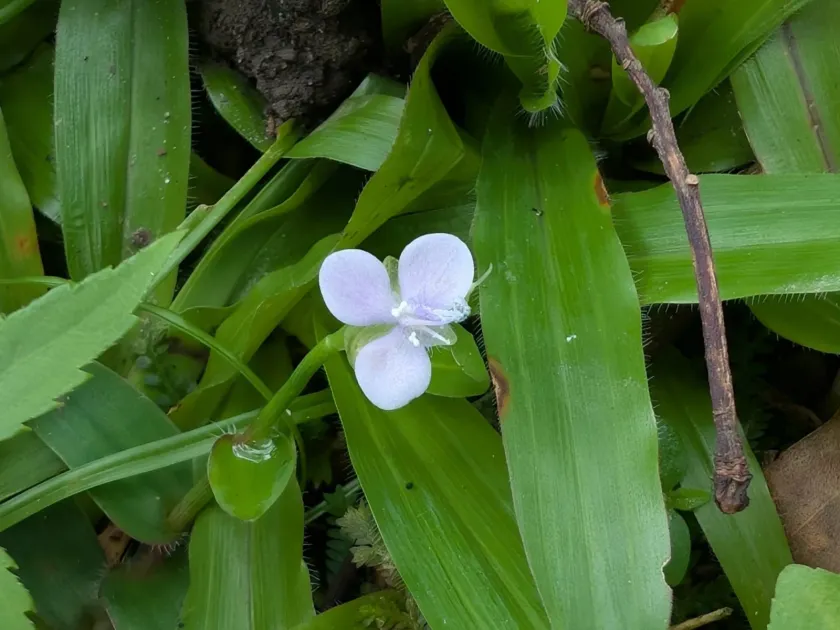
Description
Sowing dates
Murdannia loriformis is a perennial herbaceous plant belonging to the Commelinaceae family. In commercial agricultural settings, propagation is primarily performed vegetatively, either through the division of rhizomes or stem cuttings, which ensures the consistency of desired traits.
Planting material is placed into pre-warmed soil once the risk of late spring frosts has passed. To ensure optimal establishment, cuttings are often pre-rooted in greenhouses or specialized high-humidity substrates before being transplanted to the main production field.
Planting patterns are selected based on the level of mechanization; row-based planting with intervals of 20 to 25 centimeters between plants is standard. The planting density significantly impacts the vegetative biomass yield and the overall quality of the harvested medicinal raw material.
In temperate regions, this crop is grown mainly in greenhouses or under protective tunnel covers, as the plant is highly sensitive to cold temperatures. Humidity control during the rooting phase is a critical factor for a successful start to the vegetative growth cycle.
The optimal start for active growth aligns with the stabilization of temperatures above 20 degrees Celsius. Adhering to these timeframes allows the plant to accumulate sufficient vegetative mass before the period of intensive bioactive compound accumulation begins.
Growing requirements
The crop has high requirements for light levels but prefers diffused light, avoiding harsh midday sun that can scorch the leaves. In its natural habitat, the plant grows in the understory of tropical forests across Southeast Asia, indicating its adaptation to shaded environments.
The soil composition should be rich in organic matter, featuring a loose structure and excellent drainage properties. The optimal soil pH level for Murdannia growth ranges from 5.5 to 6.5, ensuring proper nutrient uptake from the substrate.
Irrigation must be consistent and moderate: the plant reacts negatively to both the drying out of the root zone and waterlogging. High relative humidity, ideally between 70% and 80%, is a necessary condition for the full development of the plant's leafy foliage.
During the active growth phase, Murdannia loriformis requires balanced mineral fertilizers with a nitrogen emphasis to promote biomass development. Applications are typically performed twice a month, alternating between mineral-based feeds and organic liquid fertilizers.
The temperature range for industrial production should be maintained between 22 and 28 degrees Celsius. At temperatures below 15 degrees, growth slows significantly or ceases, which negatively impacts the concentration of pharmacologically active compounds in the leaves.
Yield
The yield of Murdannia green mass depends on the frequency of harvests and the quality of agronomic management. In protected growing conditions, it is possible to perform 3–4 cuttings of leafy stems per vegetative season, ensuring a steady supply of commercial raw material.
Maximum productivity is typically achieved in the second year of the plantation's life once the root system has fully established itself within the substrate. Intensive biomass harvesting requires regular soil fertilization after each cutting to restore nutrient levels.
The quality of the harvest is assessed based on leaf density and the absence of mechanical damage to the stems. The primary value lies in the fresh leaves and young shoots, which contain high levels of glycosides and other essential bioactive compounds.
When drying technology is correctly applied, the yield of dried raw material is approximately 15–20% of the fresh harvest weight. Drying must be conducted in dark, well-ventilated rooms at temperatures not exceeding 40 degrees to preserve the integrity of the actives.
Commercial utilization of this crop is focused on processing the harvested material into extracts and powders used in traditional and modern medicine as adaptogenic and immune-modulating agents.
Main diseases and pests
The primary threats to Murdannia crops are fungal infections resulting from poor air circulation and waterlogged soil conditions. Powdery mildew and root rot can spread rapidly, destroying a significant portion of the yield if not managed through environmental control.
Among pests, spider mites and aphids pose the greatest danger, especially in greenhouse environments. Biological control methods are prioritized for this crop, as the use of aggressive pesticides is generally avoided to maintain the purity of the medicinal product.
Nematode infestation represents a specific problem when grown in open soil or contaminated substrates. Prevention includes thorough soil disinfection before planting and the exclusive use of high-quality, verified disease-free nursery stock.
Failure to maintain appropriate temperature regimes often leads to the physiological suppression of plants, making them more vulnerable to secondary pathogens. In such cases, weakened plants lose the ability to synthesize defensive antimicrobial substances.
Regular phytosanitary monitoring is recommended to maintain the health of the plantation, allowing for the timely detection of disease outbreaks and localization through the removal of affected specimens or adjustments to microclimate settings.
Harvesting
Harvesting of Murdannia begins when plants reach the phase of maximum bioactive compound accumulation, which usually occurs just before the flowering stage. Collection should be performed in the early morning hours, after the dew has evaporated, to ensure optimal moisture levels.
Stems are cut at a height of 5–7 centimeters from the soil surface, allowing the plant to recover quickly via dormant buds in the crown zone. Tools used for harvesting must be sharp and regularly disinfected to prevent the transmission of infections between plants.
Immediately after harvesting, the material is sent for initial sorting to remove damaged parts and foreign contaminants. Minimizing the time between cutting and the start of the drying process is essential to prevent oxidation and the loss of critical chemical components.
Transporting fresh material to processing facilities should be done in perforated containers that provide sufficient airflow and prevent overheating. Storing unventilated raw material in piles is strictly prohibited due to the risk of self-heating and spoilage.
After each harvesting cycle, the plantation should be fertilized to stimulate plant regeneration. If rhizomes become depleted after 3–4 years of production, the plantation is typically renewed by dividing existing clumps or installing new, high-quality propagation material.