
Montinia caryophyllacea
Montinia caryophyllacea
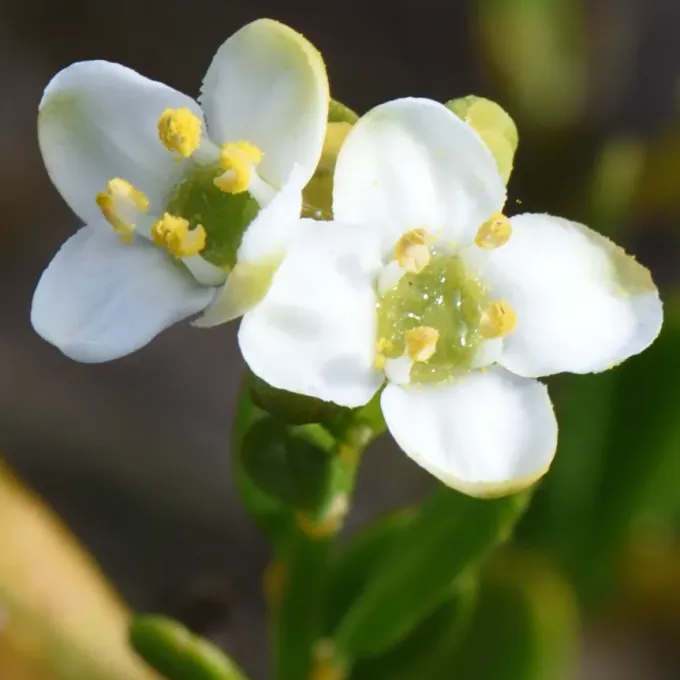
Description
Growing requirements
Montinia caryophyllacea is a distinct perennial shrub belonging to the Montiniaceae family, native to the arid regions of Southern Africa. This plant has evolved to thrive in harsh environments, displaying remarkable resilience to extreme drought and heat.
Botanically, the plant is characterized by its stiff, leathery leaves and distinctive flowers, which are typical of its family. It has a compact growth habit, making it an interesting subject for xeriscaping and botanical collections focused on succulents or arid flora.
The primary requirement for successful cultivation is excellent soil drainage. The plant naturally grows in sandy or rocky substrates and will quickly decline if planted in heavy, water-retaining soils that impede aeration around the root zone.
This species requires full sun exposure to maintain its health and physiological balance. In indoor or greenhouse cultivation, it is crucial to maximize light intensity to prevent etiolation, where the plant becomes weak and loses its natural form.
Host use of the plant includes traditional medicinal applications in its native habitat and decorative uses in climate-appropriate landscaping. Its potential for low-water gardening makes it a subject of interest for sustainable agricultural initiatives.
Main diseases and pests
The most significant threat to Montinia caryophyllacea is root rot caused by fungal pathogens that thrive in damp or poorly ventilated conditions. Once established, this condition is often fatal to the plant.
Pests such as mealybugs and scale insects may infest the plant, particularly when grown in sheltered conditions. These pests sap the vitality of the plant by feeding on its vascular fluids.
Cultural control is the most effective management strategy. This includes strictly monitored watering intervals, ensuring the substrate dries out completely between waterings, and maintaining high air circulation.
If chemical intervention is necessary, targeted application of appropriate pesticides is recommended, avoiding broad-spectrum sprays that could stress the plant further. Clean tools are essential during any pruning to prevent the spread of infections.
Regular visual inspections, especially of the leaf axils and stems, help in detecting pest populations before they reach damaging levels. Maintaining optimal growth conditions remains the primary line of defense.