
Monostroma grevillei
Monostroma grevillei
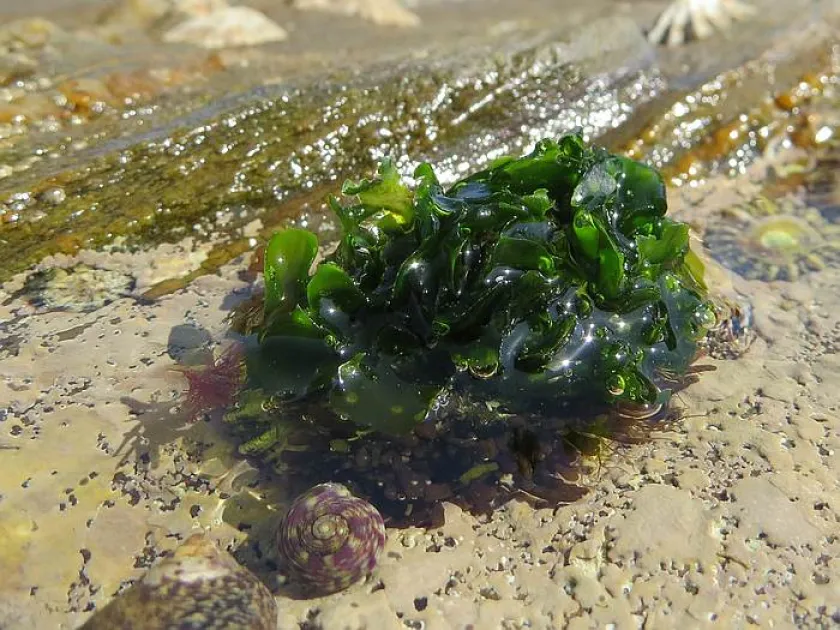
Description
Growing requirements
Monostroma grevillei belongs to the Monostromataceae family and is recognized as a premium edible green seaweed. It is an annual plant that naturally grows attached to rocks and hard substrates in coastal marine environments.
This crop requires specific environmental conditions to thrive, primarily cool water temperatures ranging from 5 to 15 degrees Celsius. It is highly sensitive to water quality and requires a consistent supply of nutrients and moderate salinity levels.
Light intensity plays a critical role in the growth of Monostroma, as it relies on photosynthesis for rapid biomass accumulation. Farmers often manage the depth of cultivation nets to ensure the optimal balance of light exposure and water flow.
Botanically, the plant is characterized by a delicate thallus made of a single cell layer. This unique structure makes the seaweed extremely thin and soft, which is highly appreciated in culinary applications but makes it vulnerable to physical damage.
The distribution of this species covers the temperate and colder coastal regions of the Northern Hemisphere. It is most commonly found in intertidal zones where water replenishment is regular and nutrient-rich.
Yield
Monostroma grevillei is widely used in the food industry, particularly in Asian cuisine, where it is prized for its exquisite texture and nutritional density. It is often consumed dried or as a fresh delicacy.
The industrial cultivation involves seeding specific substrates, usually nets or ropes, with spores. Successful yield management depends on precise seeding timing and maintaining optimal spacing between cultivation structures.
Modern aquaculture techniques allow for several harvesting cycles per season, depending on the local climate and nutrient concentrations in the water. High-efficiency farms focus on constant monitoring of water pH and transparency.
The economic value of the crop is driven by the demand for high-quality, organic sea vegetables. Proper post-harvest handling, including rapid cooling and drying, is essential to maintain the vibrant color and unique flavor profile.
Continuous research in algae biotechnology aims to improve strain resistance and increase biomass production, ensuring consistent supply for the global market throughout the year.
Main diseases and pests
A major threat to Monostroma crops is the rapid growth of epiphytic algae, which compete for light and nutrients. Severe epiphytic infestation can significantly reduce the quality and volume of the harvest.
Pests, such as certain crustacean species and gastropods, can cause damage by grazing on the soft, thin thalli of the seaweed. Farmers implement biological and mechanical control strategies to protect the crops from these intruders.
Disease outbreaks are often linked to unfavorable temperature fluctuations or high organic loads in the water. These stressors can trigger bacterial or fungal infections that lead to tissue degradation.
Pollution from industrial or agricultural runoff remains a critical threat, as seaweeds act as bio-accumulators. Monitoring heavy metals and pollutants in the water is a mandatory practice for responsible aquaculture operators.
To mitigate these risks, successful farmers employ preventive measures such as site selection away from pollution sources and regular visual inspections of the growth nets.
Harvesting
Harvesting is conducted when the seaweed reaches its peak size, typically before the onset of the reproductive phase. Timing is critical to ensure that the texture remains soft and the flavor profile is at its best.
Manual or mechanized collection is used to carefully extract the biomass from the cultivation nets. Workers must ensure that no debris or foreign particles are collected along with the seaweed to meet food safety standards.
After extraction, the raw material undergoes thorough washing to remove sediment and salt residues. This step is vital to preserve the pristine quality of the product for the end consumer.
Drying is the final stage of processing, which can be done using sun-drying techniques for artisanal quality or controlled mechanical dryers for large-scale operations. Proper moisture removal prevents microbial spoilage.
Finally, the dried product is sorted, pressed into uniform blocks or sheets, and vacuum-sealed for storage and transport to ensure long-term shelf stability.